Table of Contents
- Key Takeaways
- Understanding the Core: Definition and Critical Role of Anchor Bolts in Construction
- Anatomy of a Reliable Connection: Key Components and Functional Requirements
- Navigating Anchor Bolt Types: From Cast-in-Place to Post-Installed Solutions
- Material Science and Performance: Grades, Standards, and Durability
- Strategic Selection: How to Choose the Right Anchor Bolt for Your Project
- CTEG: A Decade of Excellence in Vietnam’s Construction Landscape
- Frequently Asked Questions (FAQ)
- Conclusion: Ensuring Structural Integrity with Expert Fastening Solutions
Key Takeaways
- Critical Definition: Anchor bolts are the fundamental interface connecting structural steel elements to concrete foundations, transferring tension, shear, and seismic loads.
- Versatile Configurations: From Cast-in-Place J and L bolts to post-installed chemical anchors, selecting the right shape and type is vital for structural stability.
- Material Mastery: Understanding steel grades (4.6 to 10.9) and protective finishes like hot-dip galvanizing is essential for durability in Vietnam’s tropical climate.
- Strategic Selection: Proper procurement requires rigorous load calculations and adherence to international standards (ASTM, DIN, JIS) and local TCVN regulations.
- Trusted Partner: Since 2011, CTEG has supplied high-quality anchor bolts to landmark projects like Long Thanh Airport and the LEGO Factory, ensuring safety through strict CO/CQ certification.
Understanding the Core: Definition and Critical Role of Anchor Bolts in Construction
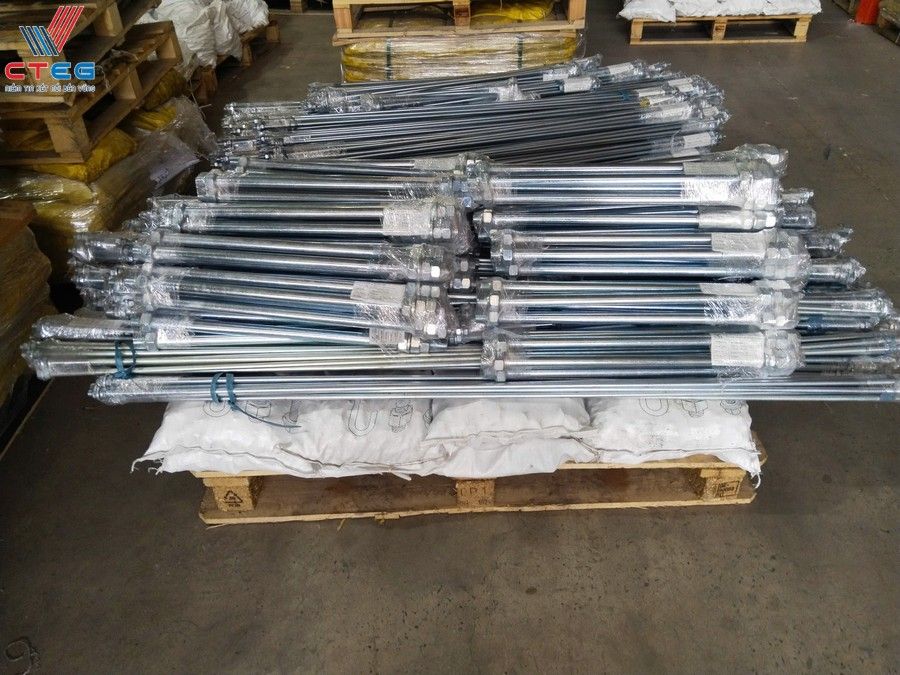
In the high-stakes world of heavy construction and industrial infrastructure, the margin for error is non-existent. A single failure in a connection point can compromise an entire structure, leading to catastrophic safety hazards and immense financial liability. The Problem facing many engineers and project managers is not just designing a steel frame that can withstand wind and weight, but ensuring that this frame remains immovably secured to the ground. Without a robust connection to the foundation, even the most advanced steel structure is vulnerable to shifting, uplifting, or collapsing under stress.
This vulnerability is Agitated by the dynamic forces structures endure—vibrations from heavy machinery, high wind loads in coastal areas, and seismic activity. If the fastener connecting the column to the concrete fails, the load path is broken. The consequences range from structural misalignment to total collapse, risking lives and halting projects indefinitely. In Vietnam’s rapidly developing construction sector, where skyscrapers and factories are rising at record speeds, the integrity of these connections is paramount.
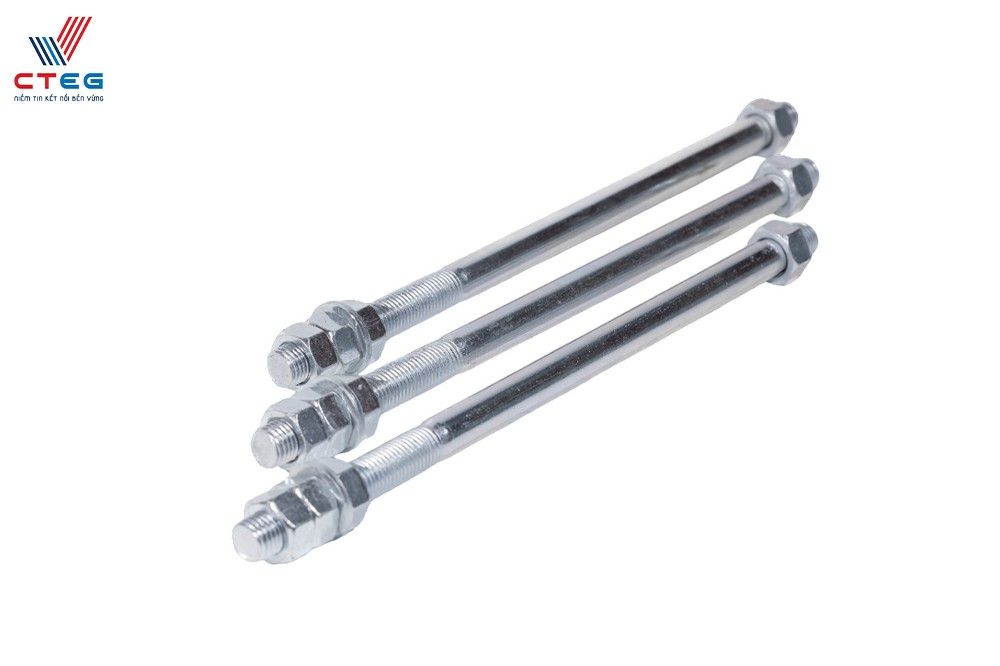
The Solution lies in the correct application of the anchor bolt (also known as a foundation bolt or bulong neo). An anchor bolt is a heavy-duty fastener designed to attach structural elements to concrete. It functions as the critical bridge between the foundation and the superstructure, transferring tension, shear, and compression forces safely into the ground. Whether securing a pre-engineered steel building, a light pole, or a massive wind turbine, the anchor bolt is the unsung hero of structural stability. By embedding deeply into the concrete, it utilizes the foundation’s mass to resist uplift and sliding, ensuring that the structure performs exactly as the engineer calculated.
Anatomy of a Reliable Connection: Key Components and Functional Requirements
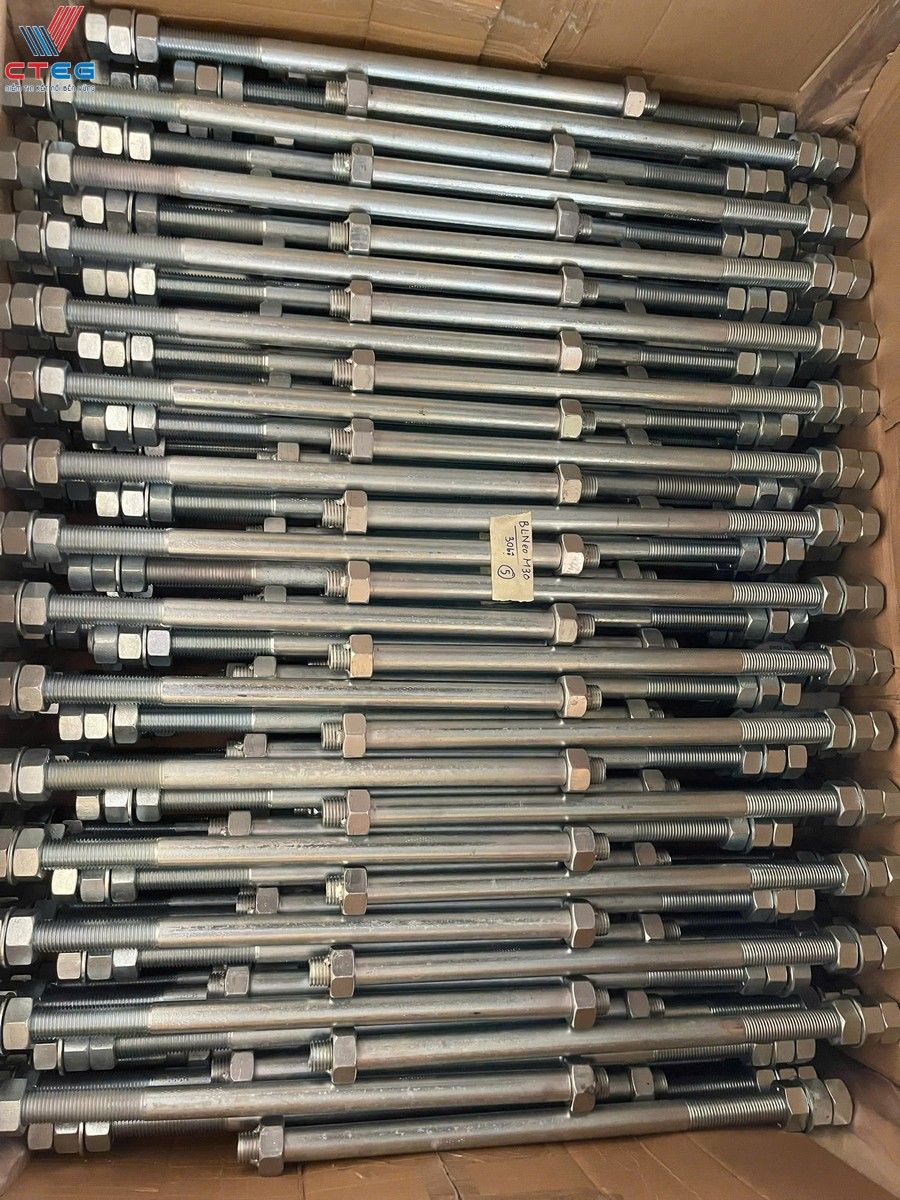
A reliable connection is not merely a piece of steel stuck in concrete; it is an engineered system where every component plays a distinct role in load transfer. The Problem often arises when procurement teams or junior engineers view anchor bolts as simple commodities, overlooking the specific functional requirements of each part. This oversight can lead to the selection of incompatible components that fail to develop the necessary clamping force.
To Agitate this issue, consider the failure mode of “pull-out.” If the threaded rod lacks the proper geometry to grip the concrete, or if the nut strips under tension because it is a lower grade than the bolt, the connection becomes the weak link. A washer that is too thin may deform, causing a loss of preload and allowing the column to wobble. These microscopic failures accumulate, leading to maintenance nightmares and structural instability.
The Solution is a comprehensive understanding of the anchor bolt assembly. A complete anchor bolt system typically consists of the threaded rod (the body), nuts, washers, and often a mounting plate. The interaction between these elements determines the bolt’s capacity to withstand static and dynamic loads. The rod provides the tensile strength, the hook or head provides the mechanical interlock with the concrete, and the nut and washer assembly secures the base plate of the structure. Understanding the anatomy of these components is the first step in ensuring a connection that meets the rigorous demands of modern construction standards like TCVN and ASTM.
The Threaded Rod: Exploring J, L, V, U, and I Shapes
The shape of the anchor bolt is dictated by the specific requirements of the foundation and the nature of the load. Using the wrong shape can result in insufficient pull-out resistance. Below is a comparison of the common configurations manufactured by CTEG:
| Shape Type | Description | Primary Application | Key Benefit |
|---|---|---|---|
| L-Bolt (L-Shape) | Rod bent at 90 degrees. | Light poles, sign structures, general construction. | Standard pull-out resistance; easy to manufacture. |
| J-Bolt (J-Shape) | Rod bent into a hook (J). | Holding down machinery, residential foundations. | Hook provides mechanical interlock with concrete. |
| I-Bolt (Straight) | Straight rod, often with a nut/plate at the bottom. | Heavy columns, high-tension applications. | Highest pull-out strength when used with an embedded plate. |
| U-Bolt | Bent in a U shape, threaded on both ends. | Pipe support, round structural members. | Secures cylindrical objects firmly to a surface. |
| V-Bolt | V-shaped bend. | Specialized structural connections. | Distributes load across two points in the concrete. |
At CTEG, we fabricate these shapes to precise engineering drawings, ensuring that whether you need a standard L-bolt or a custom V-configuration, the geometry aligns perfectly with your structural calculations.
Essential Hardware: The Role of Nuts, Washers, and Surface Finishes
While the rod bears the primary load, the hardware ensures that load is effectively transferred. A common Problem is the mismatching of nuts and bolts—using a Grade 4 nut on a Grade 8.8 bolt, for instance. This creates a “weakest link” scenario where the threads strip before the bolt reaches its yield point. Furthermore, without the correct washer, the clamping force is concentrated on a small area, potentially crushing the base plate or concrete surface.
The Solution involves meticulous selection of compatible hardware. Heavy hex nuts are often required for structural anchors to provide sufficient thread engagement. Washers, particularly thick plate washers, are essential for bridging the gap between the bolt and the oversized holes in base plates, distributing the clamping pressure evenly. Finally, the surface finish is critical. In Vietnam’s humid environment, “black” (plain finish) hardware will rust rapidly. CTEG recommends and supplies hot-dip galvanized or electro-galvanized nuts and washers to match the corrosion resistance of the anchor bolt, ensuring the entire assembly remains serviceable for the lifespan of the building.
Navigating Anchor Bolt Types: From Cast-in-Place to Post-Installed Solutions
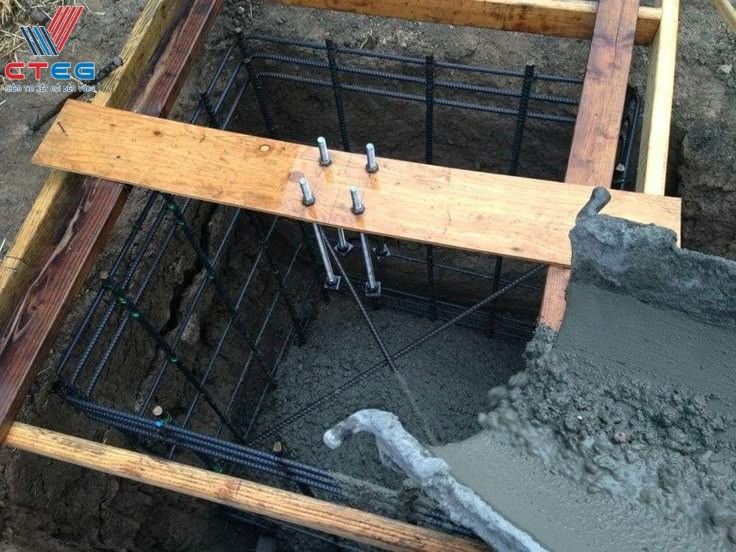
Construction projects are dynamic environments where needs evolve from the design phase to the final fit-out. A significant Problem for engineers is deciding when to install the anchoring system. Making the wrong choice between installing bolts before pouring concrete or drilling them in afterward can lead to severe project delays and structural deficiencies. If a cast-in-place bolt is misplaced, chipping out concrete to move it is a nightmare. Conversely, relying solely on post-installed anchors for massive structural loads can be risky if the concrete quality varies.
This dilemma is Agitated by the strict timelines of modern construction. A delay in setting foundation bolts stops the steel erection team, causing a ripple effect of missed deadlines and penalties. Furthermore, retrofitting heavy machinery into an existing factory requires a completely different anchoring strategy than building the factory shell itself. The “one size fits all” approach is a recipe for failure.
The Solution is to clearly distinguish between the two primary categories of anchor bolts: Cast-in-Place and Post-Installed. Each serves a distinct phase of construction and offers unique advantages. Cast-in-place anchors are the gold standard for primary structural connections, offering the highest load capacities. Post-installed anchors, including mechanical expansion and chemical systems, offer flexibility and are indispensable for retrofitting, renovations, and correcting placement errors. Understanding the capabilities and limitations of each type allows project managers to plan effectively, ensuring that the right fastening solution is available exactly when the construction schedule demands it.
Cast-in-Place Bolts: The Foundation of Heavy-Duty Structures
Cast-in-place anchor bolts are installed before the concrete is poured. They are positioned precisely using templates and secured to the rebar cage. The Problem they solve is the need for immense load-bearing capacity. Because they are embedded deep within the curing concrete, often with a hooked end or an embedded plate washer, they mobilize a massive cone of concrete to resist tension.
These are the preferred choice for primary structural steel columns, traffic signal poles, and heavy industrial equipment. At CTEG, we specialize in manufacturing high-strength cast-in-place bolts (Grades 8.8, 10.9) with diameters up to M64. The key advantage here is predictability and strength; since the bolt is integral to the foundation, it provides the most robust connection possible, capable of withstanding significant seismic and wind loads essential for Vietnam’s high-rise and industrial projects.
Expansion and Chemical Anchors: Versatility in Retrofitting
When a structure is already standing, or when a design change occurs after the pour, cast-in-place is no longer an option. The Problem here is how to achieve a secure hold in hardened concrete without damaging the surrounding structure. Agitating this further is the risk of cracking the concrete if mechanical anchors are placed too close to the edge or to each other.
The Solution lies in post-installed anchors. Expansion anchors (like wedge anchors) work by expanding against the walls of a drilled hole, creating friction. They are excellent for static loads and quick installation. However, for dynamic loads or critical applications where edge distances are small, Chemical anchors (using epoxy or resin) are superior. They bond the threaded rod to the concrete at a molecular level, creating a stress-free anchorage that is incredibly strong. CTEG supplies high-quality threaded rods specifically designed for use with chemical systems, offering a versatile solution for retrofitting machinery or adding structural extensions.
Material Science and Performance: Grades, Standards, and Durability
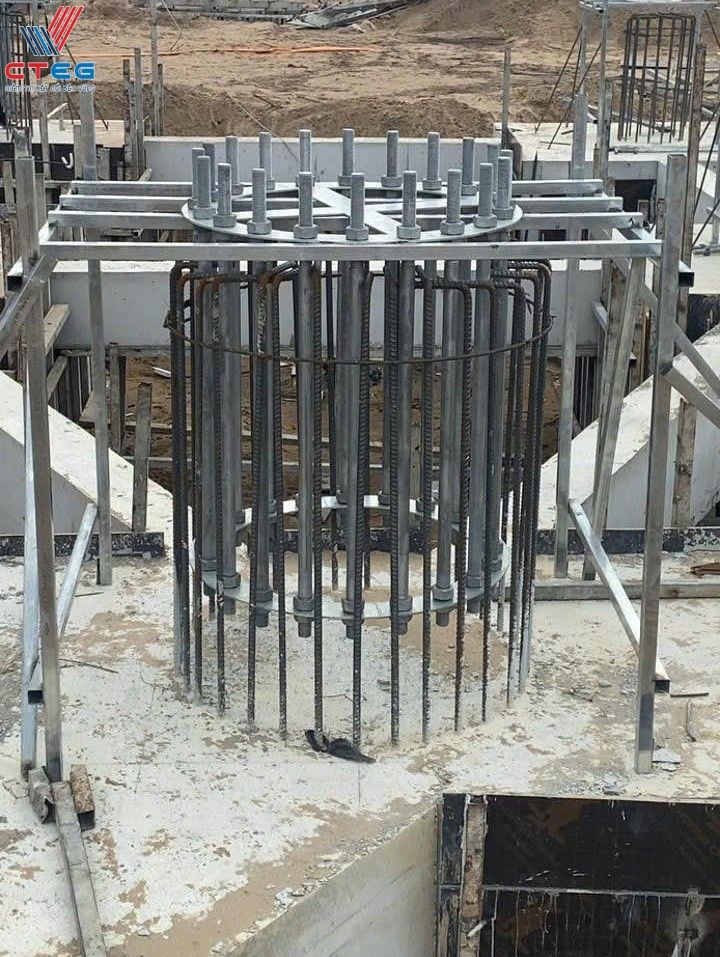
In the realm of structural engineering, “steel” is a generic term that is insufficient for specifying anchor bolts. The Problem is that a bolt made from low-carbon steel looks identical to one made from high-strength alloy steel, yet their performance characteristics are vastly different. Using a Grade 4.6 bolt where a Grade 8.8 is specified can result in the bolt snapping under a load it was never designed to handle.
This issue is Agitated by the harsh environmental realities of Vietnam. High humidity, heavy rainfall, and coastal salt spray create a corrosive environment that attacks steel aggressively. A high-strength bolt that rusts through in two years is just as dangerous as a low-strength bolt. The financial cost of replacing corroded foundation bolts—often requiring the dismantling of columns—is astronomical compared to the initial cost of choosing the right material.
The Solution is a rigorous application of material science. This involves selecting the correct Strength Grade to meet mechanical requirements and the appropriate Surface Treatment to ensure longevity. It also requires strict adherence to international Standards to ensure consistency. At CTEG, we don’t just sell bolts; we provide certified engineered components. We ensure that every batch meets the specific yield and tensile strength requirements of the design, and we apply advanced coatings like hot-dip galvanizing to protect that integrity for decades.
Understanding Strength Grades: From 4.6 to High-Tensile 10.9
The “Grade” of a bolt defines its mechanical properties. The number before the dot represents the ultimate tensile strength (1/100th in MPa), and the number after the dot represents the yield strength ratio. Here is how they compare:
| Grade | Tensile Strength (MPa) | Yield Strength (MPa) | Typical Application |
|---|---|---|---|
| 4.6 | 400 | 240 | Light structures, residential, non-critical connections. |
| 5.6 | 500 | 300 | Standard construction, medium loads. |
| 6.6 | 600 | 360 | Intermediate structural needs. |
| 8.8 | 800 | 640 | High-Tensile. Heavy steel structures, industrial plants. |
| 10.9 | 1000 | 900 | Ultra-High Strength. Critical infrastructure, bridges, wind towers. |
CTEG manufactures anchor bolts across this entire spectrum. For most heavy industrial projects in Vietnam, Grade 8.8 is the standard for ensuring safety margins against unexpected loads.
Compliance with International Standards: DIN, ASTM, JIS, and TCVN
Global construction projects in Vietnam often specify standards from the investor’s home country. A Problem arises when local suppliers cannot meet these specific foreign standards. CTEG bridges this gap by manufacturing to a wide array of international specifications:
- ASTM (USA): Common in American-invested projects (e.g., ASTM F1554).
- DIN (Germany): The European standard for precision and metric sizing.
- JIS (Japan): Essential for the many Japanese ODA and industrial projects in Vietnam.
- TCVN (Vietnam): Ensuring full compliance with local building codes and regulations.
By adhering to these standards, we ensure that a bolt specified in Tokyo or Berlin can be manufactured perfectly in Ho Chi Minh City.
Corrosion Resistance: The Benefits of Hot-Dip Galvanizing in Harsh Environments
For outdoor applications, raw steel is a liability. CTEG strongly advocates for Hot-Dip Galvanizing (HDG). Unlike simple zinc plating, HDG involves submerging the steel in molten zinc, creating a metallurgical bond that provides superior cathodic protection. This is the only viable solution for Vietnam’s tropical marine climate, preventing rust even if the coating is slightly scratched during installation.
Strategic Selection: How to Choose the Right Anchor Bolt for Your Project
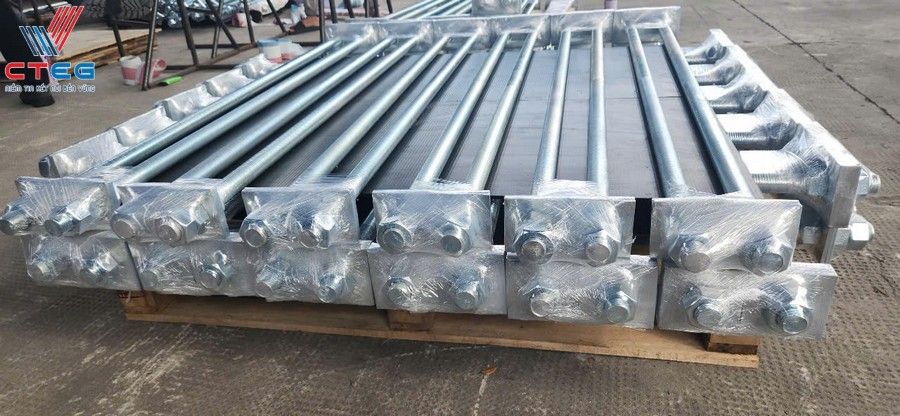
With so many variables—shape, grade, size, coating—the Problem for procurement officers and site engineers is “paralysis by analysis.” Selecting the wrong specification can lead to over-engineering (wasting budget) or under-engineering (risking safety). Agitating this is the pressure of cost. Cheap, uncertified bolts flood the market, promising savings but delivering risk.
The Solution is a strategic selection process based on engineering data and verified quality. It starts with accurate load calculations and ends with demanding proof of quality (CO/CQ) from your supplier.
Load Calculations: Balancing Tension, Shear, and Seismic Forces
Selection must begin with the loads. Engineers must calculate:
- Tension (Uplift): The force trying to pull the bolt out of the concrete (e.g., wind hitting a roof).
- Shear: The force trying to slice the bolt sideways (e.g., wind pushing against the side of a building).
- Seismic Loads: In seismically active zones, bolts must have ductility—the ability to stretch without snapping—to absorb energy.
CTEG advises consulting with structural engineers to determine if a standard Grade 5.6 is sufficient or if a high-ductility Grade 8.8 is required to handle these complex forces.
The Importance of CO/CQ and Quality Certification in Procurement
In the construction industry, paperwork is as important as the steel itself. CO (Certificate of Origin) and CQ (Certificate of Quality) are your only guarantees that the bolts you install match the specs on paper. Buying bolts without these documents is a gamble. CTEG provides full CO/CQ documentation, factory test certificates, and tensile test results for every shipment. This transparency allows contractors to pass inspections with confidence and assures investors that their capital is built on a secure foundation.
CTEG: A Decade of Excellence in Vietnam’s Construction Landscape
Since our establishment in 2011, Cường Thịnh (CTEG) has recognized a Problem in the local market: a lack of specialized, high-quality fastener manufacturers capable of meeting international standards for large-scale projects. General hardware suppliers often lacked the technical depth and production capacity required for mega-projects.
We Agitated the status quo by investing heavily in advanced manufacturing technology and adopting a “Quality – Prestige – Dedication” (Chất lượng – Uy tín – Tận tâm) philosophy. We refused to compromise on material quality or manufacturing precision.
The Solution is what CTEG represents today: a leading brand in Vietnam’s fastener industry. We are not just a vendor; we are a strategic partner for top-tier contractors like ATAD, Dai Dung, and Nam Con Son. Our capacity to produce anchor bolts from M12 to M64, in all grades and finishes, positions us as the go-to source for critical infrastructure.
Supporting National Landmarks: From Long Thanh Airport to the LEGO Factory
Our experience is written in the skylines and industrial zones of Vietnam. CTEG is proud to have supplied anchor bolts and structural fasteners to national landmarks.
- Long Thanh International Airport: A project demanding the highest standards of safety and durability.
- LEGO Factory (Binh Duong): A testament to our ability to meet the strict sustainability and quality requirements of global corporations.
- Renewable Energy Projects: Supplying massive foundation bolts for wind and solar farms across the Central and Highland regions.
These projects serve as concrete proof of our capability to deliver at scale and to specification.
Advanced Manufacturing and ERP-Driven Quality Control at CTEG
To maintain this level of trust, CTEG employs a rigorous quality control system managed through ERP (Enterprise Resource Planning) software. This ensures full traceability of every batch, from the raw material entry to the final delivery at the construction site.
“Quality is not an act, it is a habit. At CTEG, every bolt is tested for tensile strength and dimensional accuracy before it leaves our factory.” CTEG Quality Assurance Team
Our factory in Tay Ninh and warehouse in Ho Chi Minh City are equipped to handle urgent orders, ensuring that your project timeline is never compromised by supply chain issues.
Frequently Asked Questions (FAQ)
What is the difference between Grade 4.6 and Grade 8.8 anchor bolts?
The main difference is tensile strength. Grade 4.6 is mild steel with a tensile strength of 400 MPa, suitable for light to medium loads. Grade 8.8 is high-tensile steel with a strength of 800 MPa, designed for heavy structural applications, industrial buildings, and high-stress environments.
When should I use Hot-Dip Galvanized anchor bolts?
Hot-Dip Galvanized bolts should be used in any outdoor application, coastal areas, or environments with high humidity and corrosive elements. The thick zinc coating provides superior long-term protection compared to electro-galvanizing.
Can CTEG manufacture custom anchor bolts based on my drawings?
Yes, CTEG specializes in custom fabrication. We can manufacture anchor bolts in J, L, V, U, and I shapes to your exact dimensions and specifications, with diameters ranging from M12 to M64.
What documents does CTEG provide with the shipment?
We provide a full set of quality documents, including the Certificate of Origin (CO), Certificate of Quality (CQ), factory test reports (mill test certificates), and third-party tensile test results upon request.
Does CTEG support delivery to construction sites?
Yes, with our large warehouse in Ho Chi Minh City and logistics network, we support fast delivery to construction sites across Vietnam, ensuring your project stays on schedule.
Conclusion: Ensuring Structural Integrity with Expert Fastening Solutions
The anchor bolt is a small component with a massive responsibility. As we have explored, the risks of improper selection—ranging from structural instability to costly corrosion—are too great to ignore. By understanding the anatomy, types, and material grades of anchor bolts, construction professionals can make informed decisions that safeguard their projects.
However, knowledge is best paired with a reliable partner. CTEG offers more than just products; we offer peace of mind. With over a decade of experience, a portfolio of national landmark projects, and a commitment to international standards, we are ready to support your next build. Do not leave your foundation to chance. Contact CTEG today for expert consultation and high-quality anchor bolt solutions that stand the test of time.

Có thể bạn quan tâm
Những lưu ý quan trọng khi lựa chọn bu lông neo chữ L cho dự án
Real-World Applications of J-Type Anchor Bolts in Major Infrastructure: A Comprehensive Guide
The Engineering Backbone: How Anchor Bolts Secure Mega-Structures Like Long Thanh International Airport
Tại sao bu lông neo chữ L là lựa chọn hàng đầu cho móng công trình?