Table of Contents
- Key Takeaways
- Understanding the Fundamentals: What Are Anchor Bolts and Anchor Rods?
- Key Technical Distinctions: Headed Anchor Bolts vs. Fully Threaded Anchor Rods
- Differentiating Fasteners in Technical Drawings and Bill of Materials (BOM)
- Anchor Bolt vs. Anchor Rod: A Side-by-Side Comparison
- Material Grades and Industry Standards: ASTM F1554, DIN, and JIS
- Choosing the Right Fastener for Your Steel Structure Project
- Why Technical Consultation with CTEG Ensures Project Safety and Efficiency
- Frequently Asked Questions (FAQ) About Anchor Fasteners
- Conclusion: Precision in Fastening for Structural Integrity
Key Takeaways
- Structural Distinction: Headed anchor bolts rely on a mechanical interlock from the forged head, while fully threaded anchor rods depend on chemical adhesion or double-nut configurations for grip.
- Drawing Interpretation: Accurate identification of symbols in technical drawings is critical to preventing costly Bill of Materials (BOM) errors and project delays.
- Standard Compliance: Adherence to specific material grades like ASTM F1554, DIN, and JIS is non-negotiable for ensuring load-bearing safety in heavy steel structures.
- CTEG Expertise: Leveraging technical consultation from CTEG ensures precise specification, from M12 to M64 diameters, for high-stakes projects like wind farms and industrial factories.
Understanding the Fundamentals: What Are Anchor Bolts and Anchor Rods?
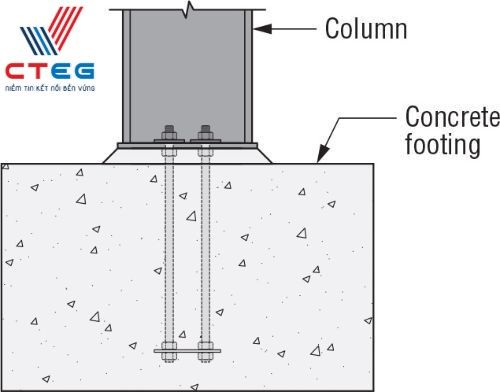
In the high-stakes world of structural engineering and heavy construction, the terms “anchor bolt” and “anchor rod” are often used interchangeably, yet they represent distinct fastening solutions with unique mechanical properties. Urgency is paramount here; misidentifying these components at the specification stage can compromise the structural integrity of the entire foundation.
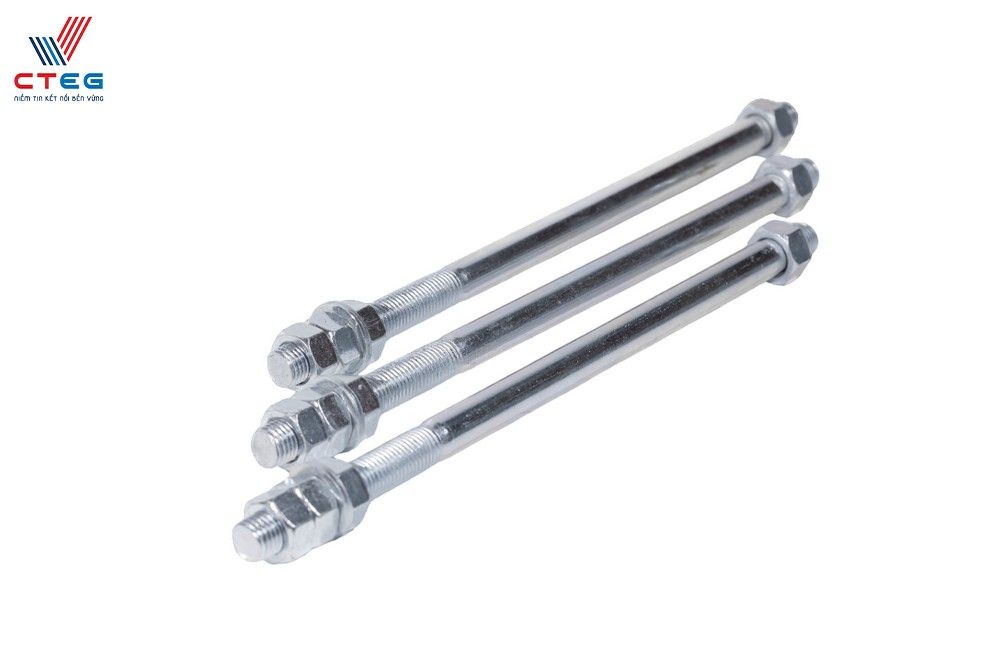
Fundamentally, an anchor bolt is a heavy-duty fastener used to connect structural and non-structural elements to concrete. The classic definition refers to a cast-in-place component, often with a forged head or a bent configuration (like J or L shapes), designed to be embedded in wet concrete. Its primary function is to transfer tension and shear loads from the steel column to the concrete foundation.
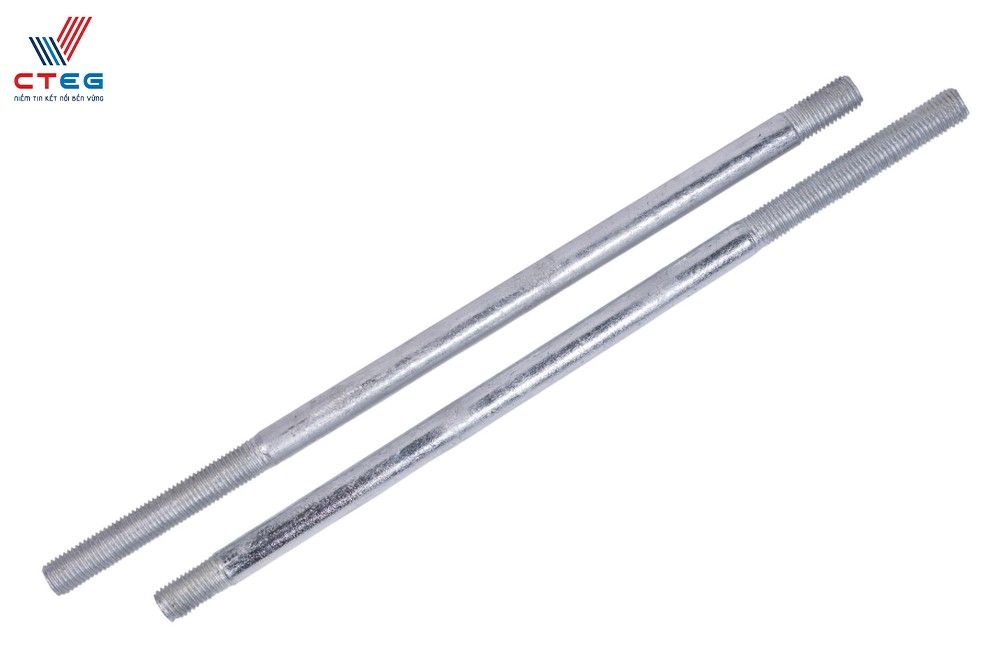
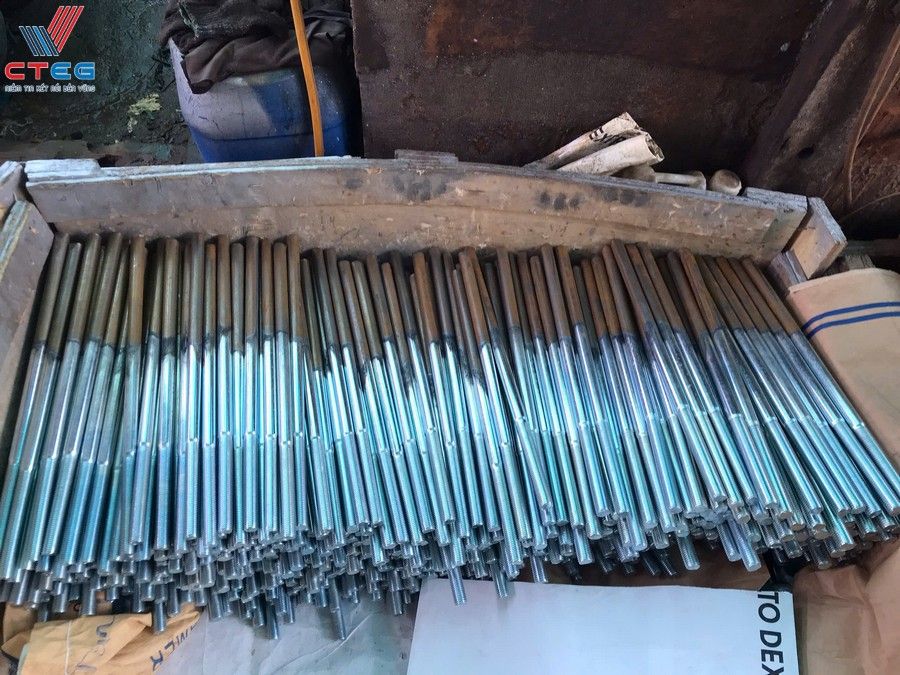
Conversely, an anchor rod typically refers to a fully threaded or double-end threaded steel rod. While it also anchors structures to concrete, its application is more versatile. Anchor rods are frequently used in post-installed scenarios using chemical epoxies or in through-bolting applications where adjustability is required. Unlike the fixed nature of a headed bolt, the anchor rod offers a continuous thread profile, allowing for variable embedment depths and the usage of multiple nut configurations to secure the base plate.
For engineers and procurement officers, understanding this nuance is the first step in ensuring useful and accurate project execution. Whether you are securing a pre-engineered steel building or a massive wind turbine tower, the choice between a bolt and a rod dictates the installation method and the load-transfer mechanism.
Key Technical Distinctions: Headed Anchor Bolts vs. Fully Threaded Anchor Rods
To make an ultra-specific selection for your project, one must look beyond the general definition and examine the mechanical behavior of these fasteners. The distinction lies not just in their appearance, but in how they resist pull-out forces under tensile load.
The primary technical divergence is the mechanism of anchorage. Headed anchor bolts utilize a mechanical interlock created by the head of the bolt bearing against the concrete. Fully threaded rods, however, rely on the bond stress between the thread and the bonding agent (in chemical anchors) or the bearing area of a nut and washer assembly (in cast-in-place rod assemblies). This difference significantly influences the calculation of breakout strength and the necessary embedment depth required by standards such as ACI 318.
The Anatomy and Mechanical Grip of Headed Anchor Bolts
A headed anchor bolt is characterized by a forged head at the embedded end, similar to a standard hex bolt but often with specific dimensions tailored for concrete anchorage. This head is the critical feature that provides the “mechanical grip.”
When a tensile load is applied to the exposed end of the bolt, the force is transferred down the shank and concentrated at the head. The head pushes against the surrounding concrete, creating a cone of compression. This mechanical interlock is incredibly reliable and is often preferred for heavy structural columns where substantial uplift forces are anticipated. Because the resistance is physical rather than chemical, headed bolts are less susceptible to installation errors related to hole cleaning or epoxy mixing, making them a robust choice for primary structural connections.
“In heavy structural applications, the reliability of a forged head provides a definitive mechanical lock that engineers trust for critical load paths.”
Structural Engineering Specialist
The Versatility and Adjustability of Fully Threaded Anchor Rods
Fully threaded anchor rods, often referred to as “all-thread” rods, offer a distinct advantage: adjustability. Because the threads run the entire length of the rod, nuts can be positioned at any point. This is particularly useful in scenarios where the precise elevation of the base plate might need adjustment on-site, or where the thickness of the connecting member varies.
In cast-in-place applications, an anchor rod is typically fitted with a heavy hex nut and a plate washer at the embedded end. This nut assembly functions similarly to the forged head of a bolt, providing the necessary bearing surface. However, the real power of the anchor rod lies in post-installation. When used with high-strength epoxy adhesives, the fully threaded profile maximizes the surface area for the chemical bond, allowing for high load capacities in retrofit projects where cast-in-place bolts are no longer an option.
Differentiating Fasteners in Technical Drawings and Bill of Materials (BOM)
One of the most unique challenges in construction procurement is translating the lines and symbols on a blueprint into an accurate Bill of Materials (BOM). Errors at this stage are urgent to address, as they inevitably lead to fabrication delays and on-site incompatibilities.
Engineers and detailers use specific conventions to denote whether a connection requires a headed bolt or a threaded rod. Mastering these visual cues is essential for accurate material ordering.
Identifying Symbols and Callouts in Structural Blueprints
On structural drawings, a headed anchor bolt is often depicted with a distinct hexagonal shape at the bottom of the embedment detail, or a “hook” if it is a bent bolt (J or L type). The callout might specify “3/4-10 x 18 Headed Anchor,” indicating diameter, thread pitch, and length.
In contrast, an anchor rod assembly is frequently drawn with a nut and washer at the bottom. The callout will often read “Rod” or “Threaded Rod,” and may include specifications for the nut configuration, such as “w/ Heavy Hex Nut & Plate Washer.” Pay close attention to the thread length notation. A symbol indicating threads running the full length confirms an all-thread rod, whereas threads stopping partway down the shank suggest a rod threaded at each end or a standard bolt.
Common BOM Errors and How to Avoid Mis-specification
Misinterpreting these symbols leads to common, yet avoidable, errors in the BOM. A frequent mistake is ordering fully threaded rods when the design assumes the shear resistance of a solid, unthreaded shank found on a headed bolt. The reduced cross-sectional area of a threaded rod can significantly lower its shear capacity compared to the unthreaded body of a bolt.
Avoid these common pitfalls:
- Ignoring Thread Length: Failing to specify “Full Thread” vs. “Thread Each End” can result in rods that cannot be tightened down.
- Grade Confusion: Assuming a standard A307 grade when the drawing specifies a high-strength ASTM F1554 Grade 55 or 105.
- Nut/Washer Omission: Forgetting to list the embedded nut and washer for anchor rods, rendering them useless for cast-in-place applications.
Anchor Bolt vs. Anchor Rod: A Side-by-Side Comparison
To provide a clear, useful reference for your decision-making process, the following table outlines the critical differences between these two fastening solutions.
| Feature | Headed Anchor Bolt | Fully Threaded Anchor Rod |
|---|---|---|
| Primary Grip Mechanism | Mechanical interlock via forged head | Chemical bond (epoxy) or Mechanical via embedded nut |
| Installation Method | Primarily Cast-in-Place | Cast-in-Place or Post-Installed (Epoxy) |
| Adjustability | Low (Fixed head position) | High (Nut can be positioned anywhere) |
| Shear Strength | Higher (Solid shank diameter) | Lower (Reduced by thread root diameter) |
| Typical Application | Structural columns, heavy machinery | Retrofits, through-bolting, variable heights |
| Cost Efficiency | Economical for standard sizes | Cost-effective for custom lengths |
Material Grades and Industry Standards: ASTM F1554, DIN, and JIS
The structural integrity of any connection is only as good as the steel it is made from. In the realm of anchor fasteners, ultra-specific adherence to material standards is non-negotiable. At CTEG, we strictly follow international standards to ensure every bolt and rod meets the rigorous demands of modern infrastructure.
ASTM F1554 is the gold standard for anchor bolts in the United States and many international projects. It covers three distinct grades:
- Grade 36: Low carbon steel, weldable, suitable for general applications.
- Grade 55: High-strength, low-alloy steel, often preferred for its balance of strength and weldability.
- Grade 105: Quenched and tempered alloy steel, providing the highest tensile strength for critical heavy-load applications.
Beyond ASTM, CTEG also manufactures to DIN (German) and JIS (Japanese) standards, ensuring compatibility with global equipment and design specifications. For instance, high-strength rods often require Grade 8.8 or 10.9 steel under ISO/DIN standards, which CTEG supplies with full certification. Understanding these grades is vital; substituting a Grade 36 rod where a Grade 105 is specified can lead to catastrophic failure under load.
Choosing the Right Fastener for Your Steel Structure Project
Selecting between an anchor bolt and an anchor rod is not merely a matter of preference; it is a calculated engineering decision. To ensure the safety and longevity of your structure, consider the following factors.
1. Installation Timing: If you are pouring new concrete, headed anchor bolts are often the standard choice for their superior mechanical lock. If you are connecting to existing concrete, a fully threaded rod with high-strength epoxy is the only viable solution.
2. Load Type: For connections subject to high shear forces, the unthreaded shank of a headed bolt offers superior performance. If the connection is primarily tension-based, a high-grade threaded rod is equally effective.
3. Adjustability Needs: If the project requires significant leveling or if the base plate thickness is not finalized, the fully threaded rod offers the flexibility to adjust nut positions, saving time and labor on site.
Why Technical Consultation with CTEG Ensures Project Safety and Efficiency
In the complex landscape of industrial construction, off-the-shelf solutions rarely suffice. This is where CTEG’s value as a technical partner becomes unique and indispensable. We are not just a supplier; we are a solution provider with a decade of experience in Vietnam’s most demanding projects, including the Long Thanh International Airport and the LEGO factory in Bình Dương.
Consulting with CTEG’s technical team ensures that you are not just buying steel, but acquiring a certified safety component. Our capabilities include:
- Custom Fabrication: We manufacture anchor bolts and rods from M12 to M64 diameters, tailored to exact project drawings.
- Material Verification: We provide full CO/CQ and tensile test reports, guaranteeing that the Grade 8.8 or ASTM F1554 Grade 105 material you ordered is exactly what is delivered.
- Surface Treatment: From hot-dip galvanizing to Dacromet, we advise on the best corrosion protection for your specific environmental conditions.
“Partnering with CTEG means accessing a depth of manufacturing expertise that prevents costly specification errors before they reach the job site.”
CTEG Technical Director
Frequently Asked Questions (FAQ) About Anchor Fasteners
Can I use a fully threaded rod instead of a headed anchor bolt?
It depends on the design. While a threaded rod with a nut and washer can simulate a headed bolt, you must verify that the shear capacity and pull-out strength meet the engineer’s original calculations, as threaded rods have a smaller cross-sectional area.
What is the difference between ASTM F1554 Grade 36 and Grade 55?
Grade 55 offers higher yield strength (55 ksi) compared to Grade 36 (36 ksi). Additionally, Grade 55 is often weldable (if specified), making it a versatile choice for structural applications requiring higher loads.
Does CTEG provide certification for its anchor bolts?
Yes. All CTEG products come with complete documentation, including Mill Test Certificates, Certificates of Origin (CO), and Certificates of Quality (CQ), ensuring full compliance with project specifications.
What is the maximum diameter CTEG can manufacture?
CTEG has the capability to manufacture anchor bolts and rods up to M64 in diameter, catering to massive infrastructure projects like wind turbine foundations and heavy industrial plants.
Conclusion: Precision in Fastening for Structural Integrity
The distinction between an anchor bolt and an anchor rod is a critical detail that underpins the safety of every steel structure. By understanding the mechanical differences, mastering the interpretation of technical drawings, and adhering to strict material standards like ASTM F1554, engineers and contractors can ensure the longevity and stability of their projects.
Don’t leave your foundation to chance. For ultra-specific advice and high-quality manufacturing that meets international standards, trust the expertise of Cường Thịnh (CTEG). Contact us today to discuss your project requirements and ensure your specifications are precise, safe, and efficient.

Có thể bạn quan tâm
Những lưu ý quan trọng khi lựa chọn bu lông neo chữ L cho dự án
Real-World Applications of J-Type Anchor Bolts in Major Infrastructure: A Comprehensive Guide
The Engineering Backbone: How Anchor Bolts Secure Mega-Structures Like Long Thanh International Airport
Tại sao bu lông neo chữ L là lựa chọn hàng đầu cho móng công trình?