Table of Contents
- Understanding the Fundamentals: J Bolts vs. Anchor Bolts
- The Mechanics of the Hook: How J Bolts Secure Foundations
- Exploring the Anchor Bolt Family: Headed, L-Type, and Post-Installed
- J Bolt vs. Anchor Bolt: Key Differences at a Glance
- When to Use Each: Practical Scenarios for Your Construction Project
- Material Selection and International Standards (ASTM, DIN, JIS)
- Best Practices for Installation and Avoiding Common Failures
- Frequently Asked Questions (FAQ)
- Conclusion: Securing Your Project with the Right Fastener
- Fundamental Distinction: J bolts utilize a hooked end for mechanical interlock in concrete, primarily for tension loads, while headed anchor bolts rely on a washer or forged head for superior pull-out resistance.
- Critical Embedment: Proper calculation of embedment depth is non-negotiable for structural safety; insufficient depth leads to catastrophic pull-out failures.
- CTEG Manufacturing Capability: Cường Thịnh (CTEG) provides custom fabrication from M12 to M64 diameters with grades ranging from 4.6 to high-strength 10.9, meeting strict international standards like ASTM and DIN.
- Application Strategy: Use J bolts for light poles and sill plates; opt for heavy-duty headed anchors for industrial machinery and high-rise structural columns.
Understanding the Fundamentals: J Bolts vs. Anchor Bolts
Before: For many project managers and contractors, the terminology surrounding foundation fasteners can be a source of confusion. Using the terms “J bolt” and “anchor bolt” interchangeably is a common mistake that can lead to specification errors, procurement delays, and, in the worst-case scenarios, structural vulnerabilities. Without a clear understanding of the distinctions, you risk selecting a fastener that cannot handle the specific tensile or shear loads of your project.
After: Imagine approaching your next project with absolute clarity, knowing exactly which fastener type aligns with your structural drawings and load requirements. By distinguishing these components correctly, you ensure the longevity of your foundation and the safety of the structure above it.
Bridge: To bridge this gap in knowledge, we must first define the core concepts. An anchor bolt is a broad category of fasteners used to connect structural and non-structural elements to concrete. A J bolt is a specific type of anchor bolt, characterized by its hook shape. While all J bolts are anchor bolts, not all anchor bolts are J bolts. J bolts are cast-in-place fasteners, meaning they are set in wet concrete, where their bent end creates resistance against being pulled out. Understanding this hierarchy is the first step toward making informed engineering decisions.
The Mechanics of the Hook: How J Bolts Secure Foundations
The effectiveness of a J bolt lies entirely in its geometry. Unlike chemical anchors that rely on bonding agents, or expansion anchors that rely on friction against the hole walls, a J bolt relies on a mechanical interlock mechanism. When concrete is poured and hardens around the “J” shape, the hook acts as a physical anchor deep within the foundation.
When a vertical force (tension) attempts to pull the bolt out of the concrete, the hook engages with the aggregate and cement matrix above it. This shape converts the vertical pull into a compressive force against the concrete sitting inside the curve of the hook. This is a simple yet highly effective mechanism for moderate loads.
However, the mechanics have limitations. If the concrete is not vibrated properly during installation, air pockets can form around the hook, drastically reducing its holding power. Furthermore, under extreme tension, the steel hook can physically straighten if the steel grade is insufficient or the diameter is too small relative to the load. This is why understanding the physics of the hook is vital—it is not just a bent piece of metal; it is a carefully engineered component designed to transfer stress from the superstructure to the foundation.
Calculating Embedment Depth for Maximum Pull-out Resistance
Before: A common failure point in construction is underestimating the required embedment depth. Contractors may guess the depth or use a “standard” length without calculating the specific pull-out cone for the concrete strength, leading to bolts that rip free under stress.
After: By applying precise calculations, you ensure that the concrete will fail (in a predictable cone shape) before the steel bolt yields or pulls out. This is the gold standard of structural safety.
Bridge: Determining the correct embedment depth involves more than just measuring the length of the bolt. Engineers must consider the bolt diameter, the grade of the steel (e.g., 8.8 vs. 4.6), and the compressive strength of the concrete (MPa). A general rule of thumb often used is that the embedment depth should be at least 12 times the bolt diameter, but this varies based on load.
For high-tension applications, the “pull-out cone” theory is used. The deeper the bolt is embedded, the larger the volume of concrete that must be displaced for a failure to occur. At CTEG, we recommend consulting the specific ASTM F1554 or DIN standards to calculate the precise effective embedment depth required to develop the full tensile strength of the material.
CTEG’s Production Standards for Pre-Engineered Steel Buildings
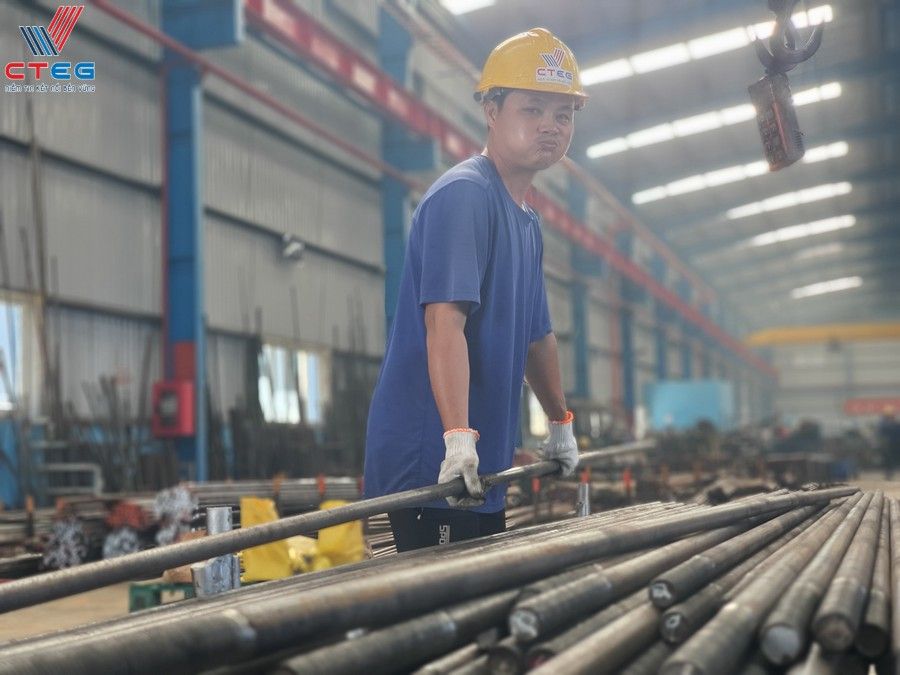
At Cường Thịnh (CTEG), we understand that the quality of the anchor bolt dictates the stability of the entire pre-engineered steel building. As a leading brand in Vietnam, we do not compromise on production standards.
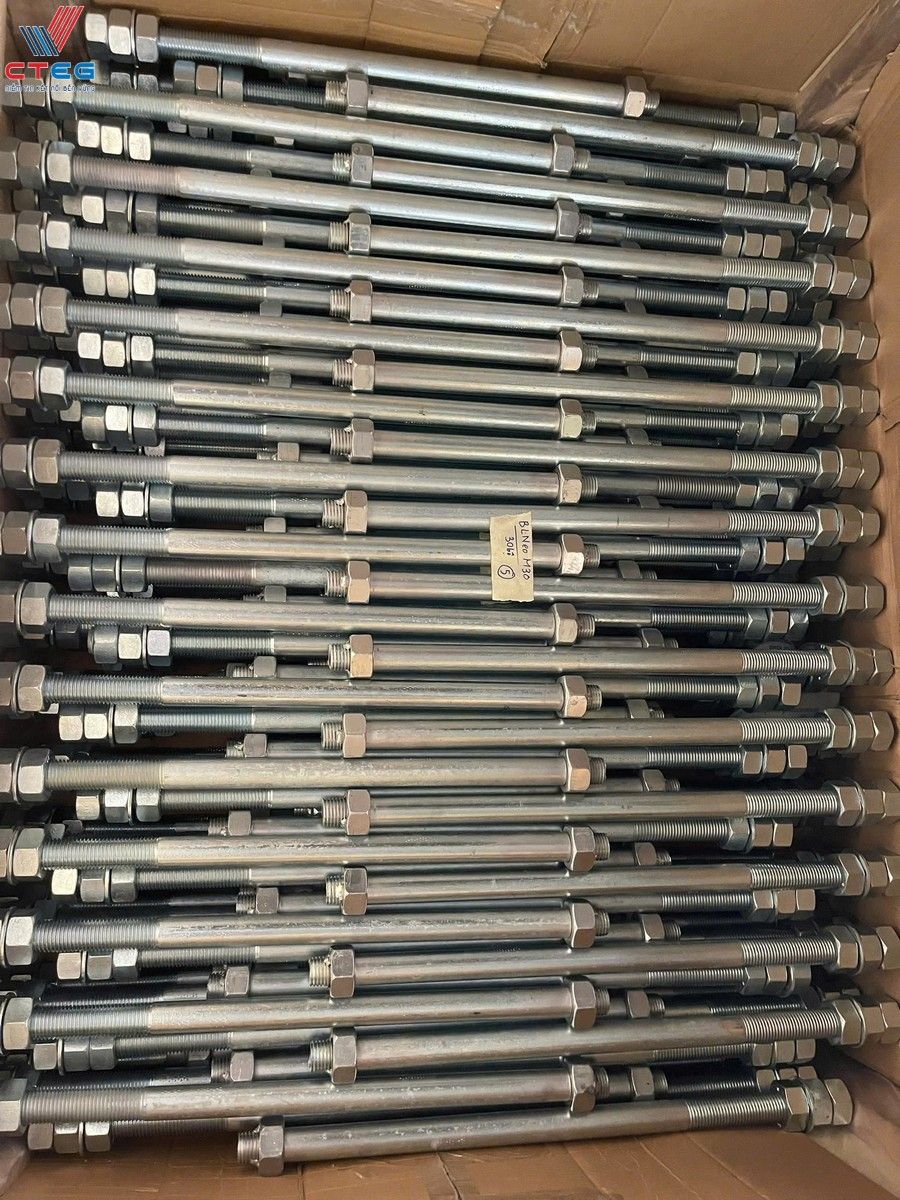
Our manufacturing capabilities are designed to meet the rigorous demands of major infrastructure projects, such as the Long Thanh International Airport and the LEGO factory in Binh Duong. We produce J bolts and other anchor configurations with diameters ranging from M12 to M64. Crucially, we offer flexible strength grades, including standard 4.6 and 5.6, as well as high-strength 8.8 and 10.9 grades for heavy industrial applications.
Whether your project requires “hàng đen” (plain finish), electro-galvanized, or hot-dip galvanized finishes for corrosion resistance, CTEG ensures every batch is tested for tensile strength and thread accuracy. Our commitment to “Chất lượng – Uy tín – Tận tâm” means we deliver solutions that strictly adhere to your technical drawings.
Exploring the Anchor Bolt Family: Headed, L-Type, and Post-Installed
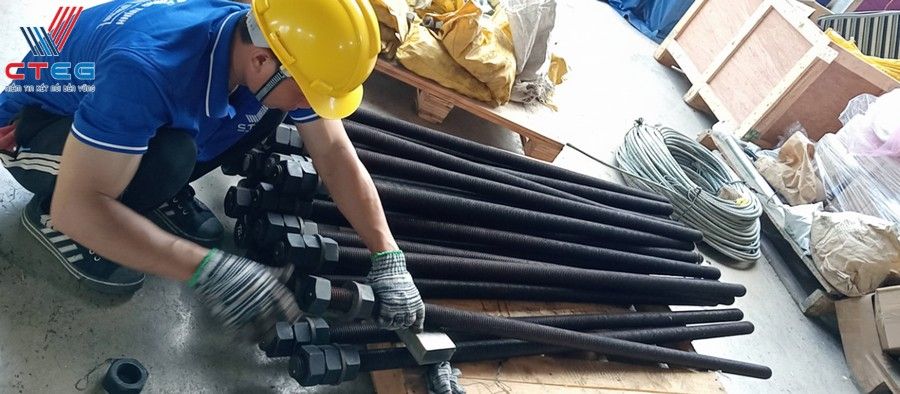
While J bolts are a staple in construction, they are part of a much larger family of anchor bolts, each designed for specific stress scenarios. Relying solely on J bolts for every application is a “Before” state mindset that limits your project’s potential and safety.
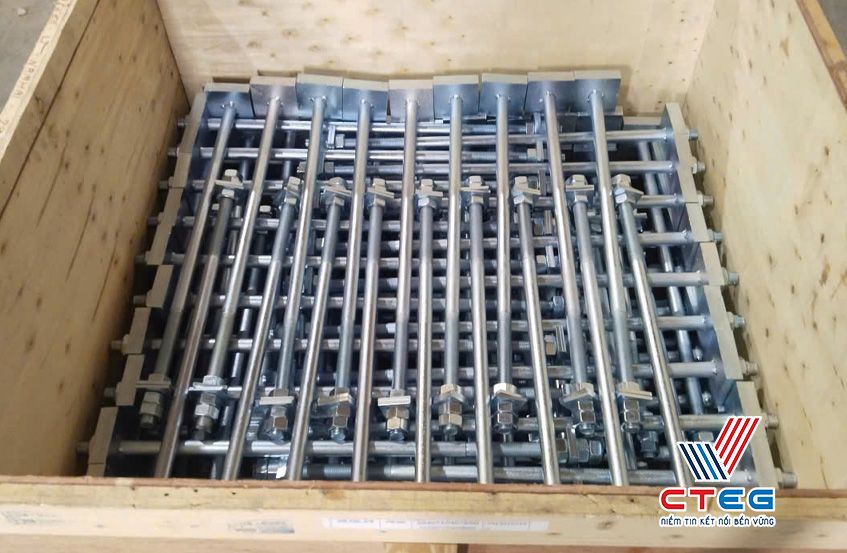
The L-type anchor bolt functions similarly to the J bolt but features a 90-degree bend. It is often used where space is limited, or the geometry of the rebar cage requires a lower profile hook. However, for heavy-duty applications, the industry often shifts toward headed anchor bolts. These are straight bolts with a forged head (like a hex bolt) or a nut and washer plate embedded in the concrete. The head provides a solid bearing surface, creating a much stiffer and stronger anchor point than a simple hook.
Finally, there are post-installed anchors. Unlike J or L bolts which are cast-in-place, these are installed after the concrete has cured. They include mechanical expansion anchors and chemical epoxy anchors. While they offer flexibility for retrofitting, they generally do not match the sheer load-holding capacity of a properly designed cast-in-place headed or hooked bolt.
Headed Anchor Bolts vs. Hooked Bolts: A Performance Comparison
When comparing performance, the distinction between headed and hooked (J or L) bolts is significant. Research and industry standards, such as ACI 318, have shown that headed anchor bolts typically offer superior pull-out performance compared to hooked bolts of the same diameter and embedment.
The primary reason is the mechanism of load transfer. A J bolt transfers load through the bearing of the hook against the concrete. Under high tension, the hook can act like a wedge, creating splitting forces that may crack the concrete. Furthermore, as mentioned earlier, the hook itself can straighten (unbend) if the steel yields.
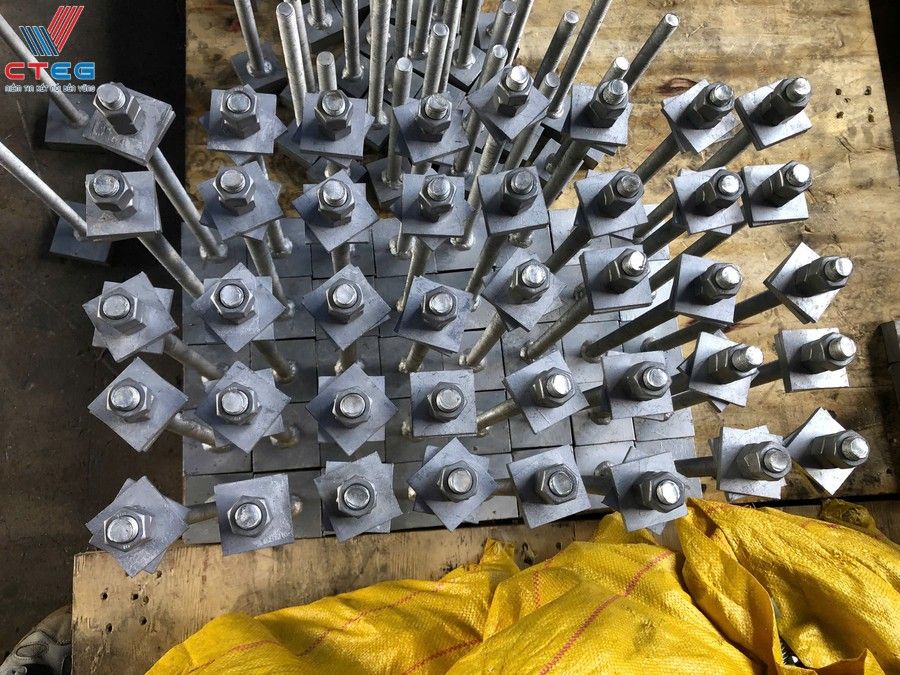
In contrast, a headed anchor bolt transfers load through the bearing area of the head. This creates a more uniform stress distribution and eliminates the risk of the anchor straightening. For projects involving high seismic loads or heavy dynamic machinery, headed bolts are often the preferred engineering choice over traditional J bolts due to this enhanced reliability and stiffness.
J Bolt vs. Anchor Bolt: Key Differences at a Glance
To help you make a quick decision, we have compiled the key differences between standard J bolts and the broader category of heavy-duty headed anchor bolts.
| Feature | J Bolt (Hooked) | Headed Anchor Bolt |
|---|---|---|
| Anchoring Mechanism | Mechanical interlock via hook shape | Bearing force via forged head or nut/washer |
| Pull-out Resistance | Moderate (Risk of straightening) | High (Superior bearing area) |
| Installation Timing | Cast-in-place (Before pour) | Cast-in-place (Before pour) |
| Primary Load Type | Tension (Light to Medium) | Tension & Shear (Heavy Duty) |
| Common Applications | Light poles, residential sills, signage | Structural steel columns, heavy machinery |
Load Bearing Capacity: Tensile vs. Shear Strength
The choice between these fasteners often comes down to the type of load the connection must support. Tensile load is the force pulling the bolt straight out of the concrete. J bolts perform adequately here for lighter structures, but as noted, headed bolts are superior for high-tension needs.
Shear load is the force trying to slice the bolt sideways (e.g., wind pushing against a wall, trying to slide it off the foundation). While both bolts can handle shear, the critical factor is often the grade of the steel (e.g., Grade 8.8 vs. 4.6) and the diameter. However, headed bolts often allow for better confinement in the concrete, providing a more robust reaction to complex combinations of shear and tension forces often found in industrial steel structures.
Installation Timing: Cast-in-Place vs. Post-Installed Solutions
Timing is a major logistical constraint. Cast-in-place bolts, including both J bolts and headed anchors, must be positioned with extreme precision before the concrete truck arrives. This requires templates and careful planning. The benefit is the highest possible strength.
Post-installed solutions (like wedge anchors or chemical studs) are drilled and installed after the concrete cures. This offers a “Bridge” for projects where layouts change or errors occur. However, they are generally more expensive per unit and rely heavily on the quality of the installation (hole cleaning, torque) to achieve their rated capacity. For primary structural foundations, cast-in-place remains the “After” state of stability you should aim for.
When to Use Each: Practical Scenarios for Your Construction Project
Before: You are staring at a set of plans, unsure if the specified bolts are overkill or insufficient.
After: You confidently select the right fastener, optimizing both safety and budget.
The decision usually dictates itself based on the scale of the structure. J bolts are the industry standard for “light” to “medium” duty applications where the primary goal is holding an object down against wind or minor bumps. Anchor bolts (specifically headed or high-grade rods) are for when the building itself relies on those bolts to stay standing.
Ideal Applications for J Bolts: Light Poles, Fences, and Sills
J bolts are the perfect solution for applications where the loads are predictable and moderate. Their cost-effectiveness and ease of manufacture make them ideal for:
- Residential Construction: Securing the wooden sill plate (bottom plate) to the concrete foundation.
- Light Poles and Signage: Holding down streetlights or commercial signs where wind load is the primary concern.
- Fencing: Anchoring metal fence posts to concrete curbs.
- Small Equipment: Securing pumps or generators that do not produce massive vibrations.
In these scenarios, the pull-out resistance of a standard J bolt is more than sufficient to ensure safety.
When Heavy-Duty Anchor Bolts are Non-Negotiable: Industrial Machinery and Skyscrapers
There are scenarios where using a standard J bolt is not just ill-advised; it is dangerous. You must switch to heavy-duty headed anchor bolts or high-strength straight rods (Grade 8.8 or 10.9) for:
- Pre-Engineered Steel Buildings: The main structural columns of a factory or warehouse transfer massive moment loads to the foundation.
- Heavy Machinery: Industrial presses, turbines, or crushers that generate intense vibration and dynamic loads.
- High-Rise Construction: Connecting the superstructure to the pile cap.
- Infrastructure: Bridges and highway barriers requiring compliance with strict DOT or international standards.
Material Selection and International Standards (ASTM, DIN, JIS)
The geometry of the bolt is only half the story; the material itself determines the ultimate strength. At CTEG, we emphasize that a J bolt made from low-grade steel is a weak link, regardless of how deep it is embedded.
For professional construction, you should specify bolts based on recognized international standards.
ASTM F1554 is the gold standard for anchor bolts, covering three grades: 36, 55, and 105 (indicating yield strength in ksi).
DIN standards (such as DIN 529 for masonry bolts) and JIS (Japanese Industrial Standards) are also common in Vietnam, especially for projects funded by foreign investors.
CTEG supplies bolts in various strength grades to match these standards:
- Grade 4.6 & 5.6: Standard mild steel, suitable for general construction.
- Grade 8.8 & 10.9: High-tensile steel (thép cường độ cao), essential for heavy structural loads and pre-engineered buildings.
We also provide material certificates (CO/CQ) and test reports for every shipment, ensuring the steel you install matches the steel in your calculations.
Best Practices for Installation and Avoiding Common Failures
Before: The concrete is poured, and you realize the bolts are misaligned by two inches. The project halts, and costs skyrocket.
After: The steel columns slide perfectly onto the bolt patterns, and the project proceeds ahead of schedule.
Bridge: To achieve this smooth installation, follow these best practices:
- Use a Template: Never “wet set” anchor bolts by hand after the concrete is poured. Always use a rigid template (often made of wood or steel) to hold the bolts in the exact pattern required while the concrete is poured and vibrated around them.
- Protect the Threads: Wrap the exposed threads with tape or use plastic caps before pouring concrete. Concrete splatter on threads can make nut installation impossible later.
- Vibrate Carefully: Ensure concrete is vibrated thoroughly around the J-hook or bolt head to eliminate air pockets, which severely weaken pull-out strength.
- Consider Corrosion: For outdoor environments, always opt for Hot-Dip Galvanized (mạ kẽm nhúng nóng) bolts from CTEG to prevent rust from compromising the bolt diameter over time.
Frequently Asked Questions (FAQ)
Can I bend a straight rod to make my own J bolt on-site?
No. Bending steel on-site, especially high-strength grades, can cause micro-cracks and weaken the material. It also voids the material certification. Always use factory-bent bolts from a reputable manufacturer like CTEG.
What is the difference between Grade 4.6 and Grade 8.8 anchor bolts?
Grade 8.8 is high-tensile steel, offering significantly higher yield and tensile strength than the standard mild steel of Grade 4.6. Grade 8.8 is required for heavy structural loads, while 4.6 is for lighter applications.
Does CTEG provide custom anchor bolt sizes?
Yes. We manufacture custom sizes from M12 to M64 based exactly on your technical drawings, ensuring the length, thread length, and bend geometry fit your specific foundation design.
Conclusion: Securing Your Project with the Right Fastener
Before: You started this article with uncertainty about whether to specify a J bolt or a different anchor type, potentially risking the integrity of your build.
After: You now possess the technical insight to distinguish between the mechanical hook of a J bolt and the heavy-duty bearing of a headed anchor. You understand the critical nature of embedment depth and material grades.
Bridge: The final step is procurement. Don’t leave your foundation’s safety to chance or generic suppliers. Partner with Cường Thịnh (CTEG) for certified, high-quality anchor bolts that meet international standards. Whether you need J bolts for a lighting project or high-strength anchors for a factory, we deliver the “Chất lượng – Uy tín – Tận tâm” your project deserves.

Có thể bạn quan tâm
Những lưu ý quan trọng khi lựa chọn bu lông neo chữ L cho dự án
Real-World Applications of J-Type Anchor Bolts in Major Infrastructure: A Comprehensive Guide
The Engineering Backbone: How Anchor Bolts Secure Mega-Structures Like Long Thanh International Airport
Tại sao bu lông neo chữ L là lựa chọn hàng đầu cho móng công trình?