Table of Contents
- The Foundation of Structural Integrity: CTEG’s Commitment to International Standards
- Navigating Global Benchmarks: ASTM, JIS, and DIN Standards for J-Shape Anchor Bolts
- Decoding Material Grades: Why 4.6, 8.8, and 10.9 Matter for Your Project
- The Pillars of Trust: Understanding ISO Certifications and CO/CQ Documentation
- Rigorous Testing at the CTEG Factory: From Raw Material to Tensile Strength Verification
- Advanced Surface Treatments: Protecting J-Bolts Against Corrosion
- Proven Performance: CTEG J-Shape Anchor Bolts in Major Infrastructure Projects
- Frequently Asked Questions (FAQ)
- Conclusion: Partnering with CTEG for Certified Fastening Solutions
- International Compliance: CTEG manufactures J-shape anchor bolts strictly adhering to ASTM F1554, JIS B 1178, and DIN standards to ensure global structural compatibility.
- Material Mastery: Comprehensive guide to selecting the right grades—from standard 4.6 to high-strength 8.8 and 10.9—based on specific project load requirements.
- Verified Quality: Every batch undergoes rigorous in-house tensile strength testing and dimensional inspection, backed by full CO/CQ documentation and ISO 9001:2015 certification.
- Advanced Protection: Comparison of surface treatments like Hot-Dip Galvanizing and Dacromet to maximize corrosion resistance in harsh environments.
- Proven Track Record: Trusted supplier for major infrastructure projects including Long Thanh International Airport and the LEGO Factory.
The Foundation of Structural Integrity: CTEG’s Commitment to International Standards
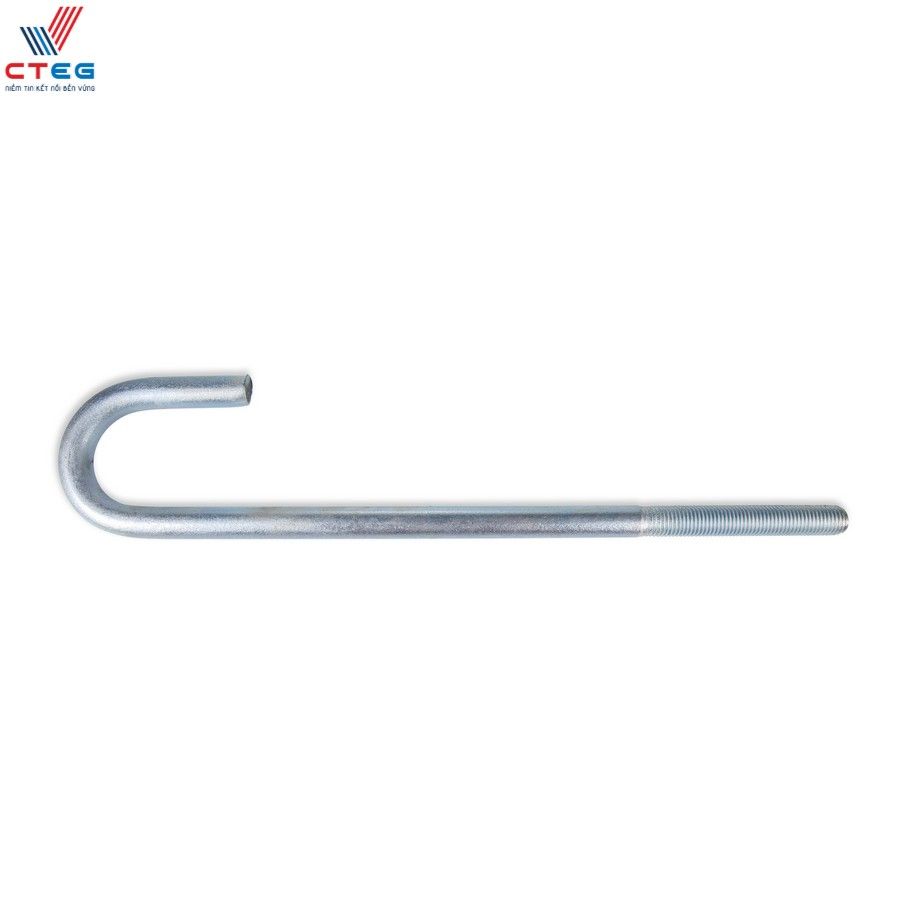
In the high-stakes world of heavy construction and infrastructure, the anchor bolt is more than just a fastener; it is the critical interface between a concrete foundation and the steel structure it supports. At Cường Thịnh (CTEG), we understand that the structural integrity of a factory, a wind turbine, or an airport terminal relies heavily on the quality of these foundational components. Since our establishment in 2011, CTEG has operated with a singular focus: to provide fastening solutions that meet the most rigorous international standards.
Feature: Our manufacturing process is governed by a strict adherence to global specifications, including ASTM (USA), JIS (Japan), DIN (Germany), and TCVN (Vietnam). We do not simply manufacture bolts; we engineer safety.
Advantage: By integrating advanced ERP management systems with a state-of-the-art manufacturing facility in Ho Chi Minh City, we eliminate the variability often found in mass-market fasteners. Our capability to produce J-shape anchor bolts ranging from M12 to M64 ensures that we can meet the precise demands of any engineering drawing.
Benefit: For our partners—whether they are building the Long Thanh International Airport or the LEGO Factory—this commitment translates to absolute peace of mind. When you choose CTEG, you are not just buying a bolt; you are securing the longevity and safety of your project with a partner who prioritizes “Quality – Prestige – Dedication” above all else.
Navigating Global Benchmarks: ASTM, JIS, and DIN Standards for J-Shape Anchor Bolts
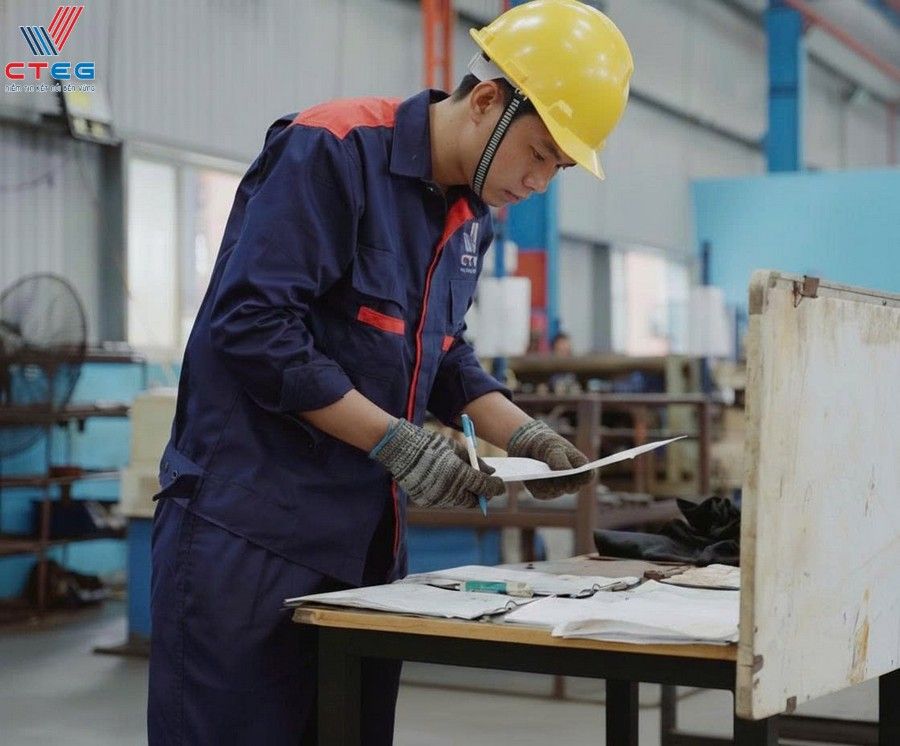
Navigating the complex landscape of international standards is a core competency at CTEG. Different projects, depending on their origin and engineering design, will specify different manufacturing standards. Understanding these benchmarks is essential for procurement managers and engineers to ensure compatibility and safety.
Feature: CTEG manufactures J-shape anchor bolts that strictly conform to the three primary global standards: ASTM F1554, JIS B 1178, and DIN specifications. We also adhere to domestic TCVN standards for local government projects.
Advantage: Our ability to switch production lines to meet these specific norms means that our bolts possess the exact chemical composition, mechanical properties, and dimensional tolerances required by the design engineers. Unlike suppliers who offer “generic” bolts, CTEG provides products that are chemically and mechanically identical to what is specified in the blueprints.
Benefit: This versatility eliminates the risk of non-compliance during site inspections. Using the correct standard ensures that the anchor bolt will perform predictably under tensile and shear loads, preventing catastrophic failures. Whether your project is designed by a Japanese contractor requiring JIS precision or an American firm specifying ASTM grades, CTEG delivers the exact match, ensuring seamless integration into the structural framework.
ASTM F1554: The Standard for Anchor Bolts in Steel Construction
Feature: ASTM F1554 is the definitive American standard specifically designed for anchor bolts embedded in concrete. It covers straight, bent, headed, and headless anchor bolts in three strength grades: 36, 55, and 105.
Advantage: The primary advantage of ASTM F1554 is its focus on ductility and yield strength. Unlike general fastener standards, F1554 is tailored for the stresses unique to anchoring steel columns. It allows for specific supplementary requirements, such as weldability (Supplement S1), which is crucial if the J-bolt needs to be tack-welded to the rebar cage before concrete pouring.
Benefit: For structural engineers, specifying ASTM F1554 ensures the bolts can withstand the dynamic loads and potential seismic forces typical in steel construction. CTEG ensures that every F1554 bolt we produce meets the strict yield strength requirements, providing a robust anchor that maintains its hold even under significant stress.
JIS B 1178: Precision Engineering from the Japanese Industrial Standard
Feature: JIS B 1178 is the Japanese Industrial Standard governing foundation bolts. It is renowned for its exacting requirements regarding dimensional tolerance and thread precision.
Advantage: The advantage of the JIS B 1178 standard lies in its rigorous control over the geometry of the J-bend and the thread pitch. Japanese engineering emphasizes precision fit and finish, ensuring that nuts run smoothly and the hook provides optimal pull-out resistance without creating stress concentrations in the concrete.
Benefit: For projects involving Japanese contractors or equipment, such as those in ODA-funded infrastructure or specialized manufacturing plants, compliance with JIS B 1178 is often non-negotiable. CTEG’s proficiency in this standard guarantees that our bolts will pass the meticulous inspections typical of Japanese-managed construction sites, preventing costly delays due to material rejection.
Decoding Material Grades: Why 4.6, 8.8, and 10.9 Matter for Your Project
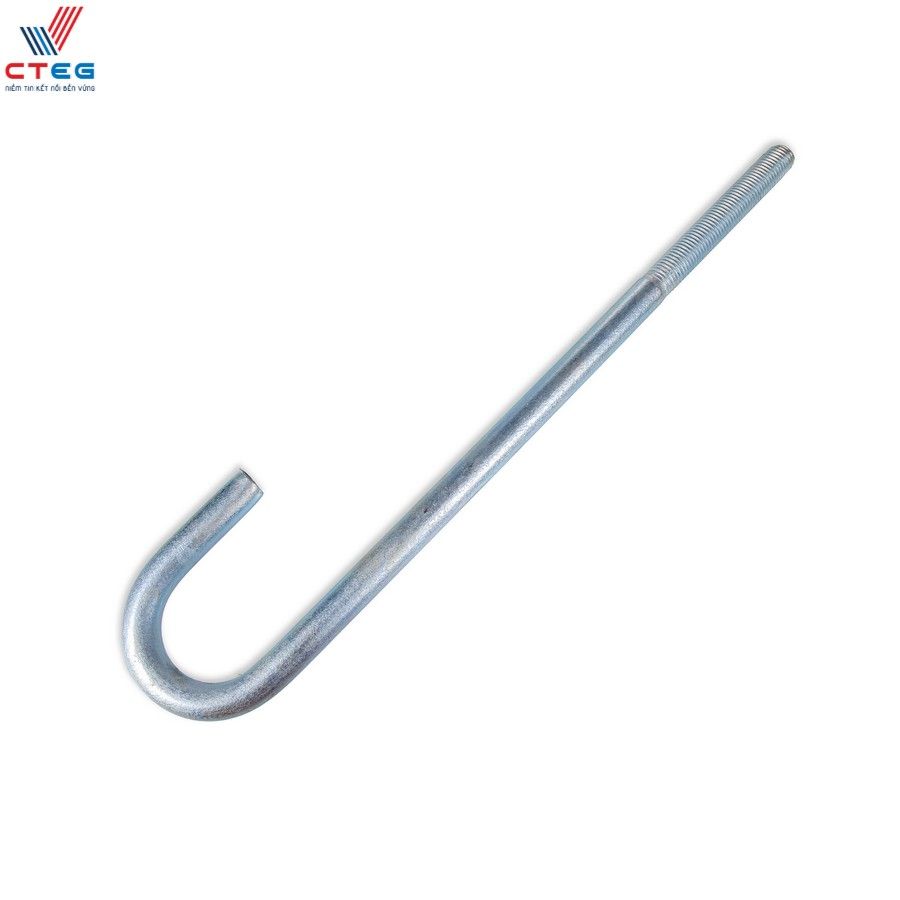
Selecting the correct material grade is perhaps the most critical decision in the procurement of J-shape anchor bolts. The grade determines the bolt’s tensile strength and yield strength—essentially, how much load it can hold before stretching or breaking. At CTEG, we offer a full spectrum of grades to suit applications ranging from light structural work to heavy industrial machinery.
Feature: We manufacture anchor bolts in three primary property classes: Grade 4.6 (Low Carbon Steel), Grade 8.8 (Medium Carbon Alloy Steel, Quenched and Tempered), and Grade 10.9 (Low Carbon Alloy Steel, Quenched and Tempered).
Advantage: This variety allows engineers to optimize their designs. A light warehouse may only need the ductility of Grade 4.6, while a high-rise building or a wind turbine tower requires the superior strength-to-weight ratio of Grade 8.8 or 10.9. CTEG provides clear documentation on the mechanical properties of each grade.
| Grade | Material Type | Tensile Strength (MPa) | Yield Strength (MPa) | Typical Application |
|---|---|---|---|---|
| 4.6 | Low Carbon Steel | 400 | 240 | Light structures, standard foundations |
| 5.6 | Carbon Steel | 500 | 300 | General construction |
| 8.8 | Medium Carbon Steel (Heat Treated) | 800 | 640 | Heavy steel structures, high-rise buildings |
| 10.9 | Alloy Steel (Heat Treated) | 1000 | 900 | Heavy machinery, wind power, bridges |
Benefit: By sourcing the correct grade from CTEG, you ensure the safety of the structure without over-engineering. Using a Grade 8.8 bolt where a 4.6 is sufficient wastes money, but using a 4.6 where an 8.8 is required invites disaster. Our technical team assists in verifying that the supplied bolts match the specific load calculations of your project.
Grade 4.6 vs. Grade 8.8: Choosing the Right Tensile Strength
Feature: Grade 4.6 bolts are made from low carbon steel and are known for their ductility. Grade 8.8 bolts are manufactured from medium carbon steel and undergo a quenching and tempering process (heat treatment) to significantly increase their hardness and strength.
Advantage: The advantage of Grade 4.6 is its ability to bend without breaking, making it ideal for standard construction where high tensile loads are not the primary concern. Conversely, Grade 8.8 offers double the tensile strength (800 MPa vs. 400 MPa), allowing for smaller diameter bolts to carry heavier loads.
Benefit: Choosing the right grade impacts both safety and cost. For standard pre-engineered steel buildings, Grade 4.6 is often the cost-effective choice. However, for critical structural connections where bolt failure is not an option, the high strength of Grade 8.8 provides the necessary safety factor. CTEG ensures that our Grade 8.8 bolts are properly heat-treated to maintain ductility while achieving high strength, avoiding the brittleness that can occur with inferior manufacturing.
High-Strength Grade 10.9: Applications in Heavy Machinery and Wind Power
Feature: Grade 10.9 is a high-strength specification offering a minimum tensile strength of 1000 MPa and a yield strength of 900 MPa. These bolts are produced from alloy steel and require precise heat treatment controls.
Advantage: The primary advantage of Grade 10.9 is its immense load-bearing capacity. It is designed to withstand extreme stress and fatigue, making it the standard for dynamic loading environments.
Benefit: In applications such as wind turbine foundations, heavy industrial machinery anchoring, or bridge construction, the bolts must resist constant vibration and massive pull-out forces. CTEG’s Grade 10.9 J-bolts provide the critical holding power required to keep these massive structures stable. We strictly control the material composition to prevent hydrogen embrittlement, a common risk in high-strength bolts, ensuring long-term reliability in the most demanding environments.
The Pillars of Trust: Understanding ISO Certifications and CO/CQ Documentation
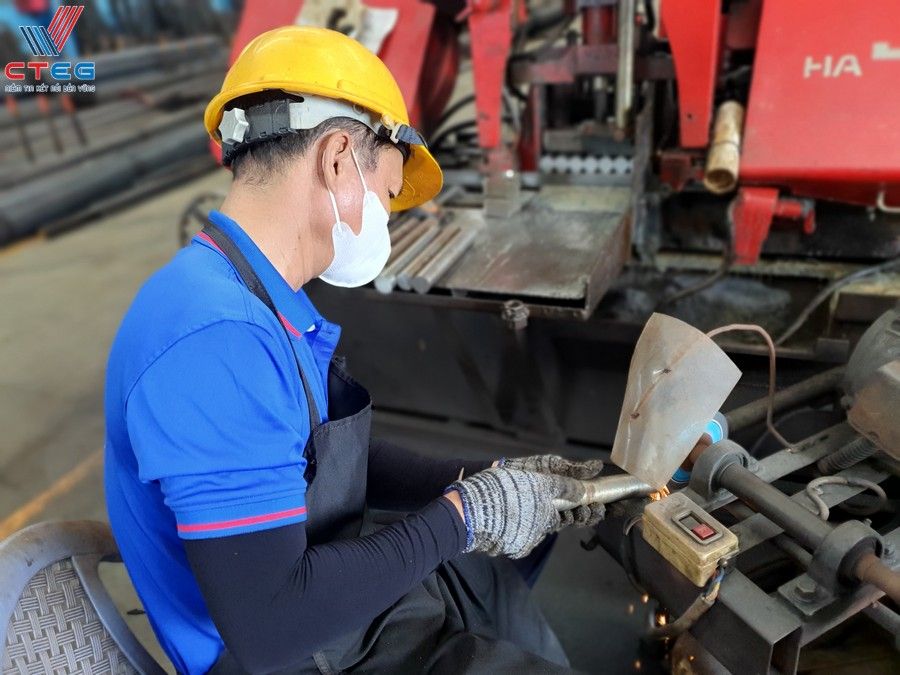
In the construction industry, trust is not just a feeling; it is a document. At CTEG, we believe that a product is not complete until the paperwork proves its quality. This is why we place immense emphasis on our ISO certifications and the provision of comprehensive CO/CQ (Certificate of Origin / Certificate of Quality) documentation.
Feature: CTEG operates under a Quality Management System certified to ISO 9001:2015. Furthermore, every shipment of J-shape anchor bolts is accompanied by a full dossier of quality documents, including mill test reports for the raw material and factory test reports for the finished product.
Advantage: This level of transparency provides full traceability. From the moment the raw steel enters our factory to the moment the finished bolts are delivered to the site, every step is documented. You can trace a specific bolt back to the specific heat number of the steel batch it was made from.
Benefit: For project owners and contractors, this documentation is the ultimate risk mitigation tool. It ensures compliance with legal and safety regulations, facilitates smooth project handovers, and passes third-party audits with ease. When you partner with CTEG, you receive not just hardware, but the “Pillars of Trust” that validate the integrity of your entire supply chain.
“We say it, we do it – and we do it right! Our commitment to transparency means you never have to guess about the quality of the steel holding your building together.”
– CTEG Leadership
Why CO/CQ is Non-Negotiable for International Procurement
Feature: The Certificate of Origin (CO) proves where the goods were manufactured, while the Certificate of Quality (CQ) details the mechanical and chemical properties of the specific batch delivered.
Advantage: These documents are the legal proof that the materials meet the project specifications. Without them, materials can be rejected by site supervisors or government inspectors, leading to costly tear-downs and delays.
Benefit: CTEG provides valid, verifiable CO/CQ documents for every order. This guarantees that the J-bolts you install are genuine, compliant, and legally cleared for use in your specific project, protecting your company from liability and ensuring smooth project acceptance.
ISO 9001:2015: Maintaining Consistency in Every Batch
Feature: ISO 9001:2015 is the international standard for Quality Management Systems (QMS). It dictates how a company manages its processes to ensure consistent product quality.
Advantage: CTEG’s adherence to ISO 9001:2015 means our production is not based on guesswork. We have standardized procedures for everything from machine calibration to final inspection. This consistency minimizes the “Monday morning” effect, where product quality varies depending on the shift or the day.
Benefit: You get the same high-quality J-bolt whether you order 100 pieces or 100,000 pieces. This reliability allows you to plan your construction schedule with confidence, knowing that material defects will not cause unexpected stoppages.
Rigorous Testing at the CTEG Factory: From Raw Material to Tensile Strength Verification
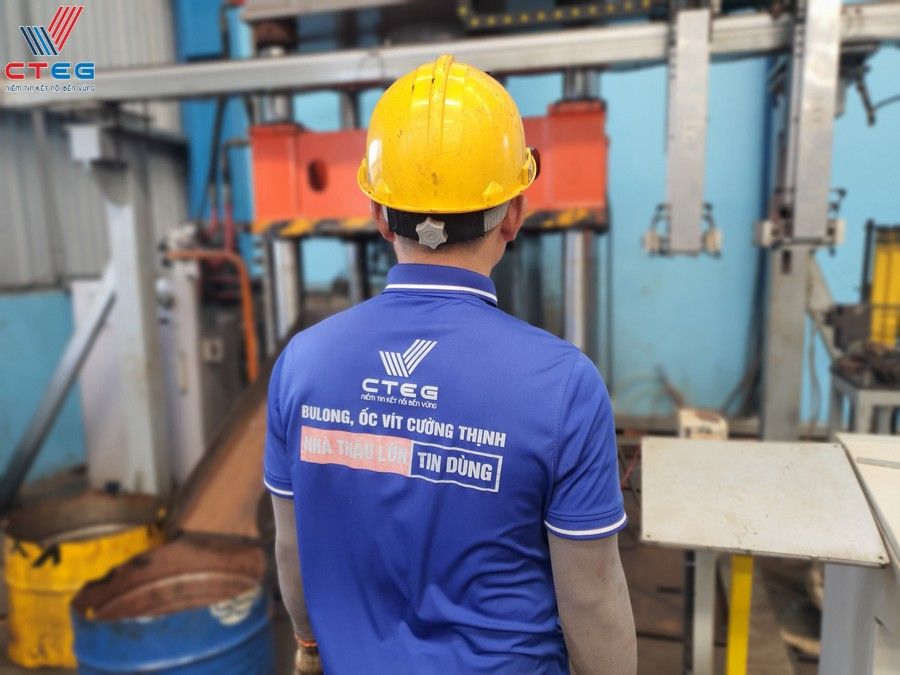
Quality assurance at CTEG is not a passive activity; it is an active, rigorous process that takes place daily within our factory walls. We do not rely solely on supplier certificates; we verify everything ourselves. Our in-house testing capabilities are a key differentiator that sets us apart from trading companies that simply resell products without technical oversight.
Feature: The CTEG factory is equipped with specialized testing machinery designed to push our products to their limits. This includes universal tensile testing machines capable of exerting massive forces to verify the yield and tensile strength of our bolts, as well as hardness testers and digital calipers for dimensional verification.
Advantage: By conducting these tests in-house, we have immediate feedback on our manufacturing process. If a batch of raw material shows even a slight deviation from the standard, it is caught before production begins. If a heat treatment cycle is slightly off, the post-production test identifies it immediately. This “check-at-source” methodology ensures that non-compliant products never leave our factory floor.
Benefit: For the customer, this translates to a near-zero defect rate. You are not the testing ground for our products; our lab is. When you receive a shipment of CTEG J-shape anchor bolts, you are receiving products that have already survived a gauntlet of tests. This proactive approach to quality eliminates the headaches of on-site failures and the expensive delays associated with returning and replacing defective materials. We invite our partners to witness these tests firsthand, reinforcing our philosophy of absolute transparency.
Step-by-Step: How CTEG Performs Tensile Strength Tests
To truly understand the reliability of a CTEG anchor bolt, one must understand the testing process it undergoes. Here is how we verify tensile strength:
- Sample Selection: Random samples are drawn from every production lot according to ISO sampling standards. This ensures the test results are statistically representative of the entire batch.
- Preparation: The bolt is machined or prepared to fit the grips of the Universal Testing Machine (UTM). For full-size bolt testing, the bolt is mounted directly to test the strength of the threads and the material simultaneously.
- Load Application: The machine applies a controlled, gradually increasing tensile load (pulling force) to the bolt. Sensors record the stress (force) and strain (elongation) in real-time.
- Yield Point Verification: We monitor the “Yield Point”—the moment the bolt begins to stretch permanently. This must meet the minimum MPa requirement for the specific grade (e.g., 640 MPa for Grade 8.8).
- Failure Point Analysis: The load is increased until the bolt fractures. This “Ultimate Tensile Strength” is recorded. We also analyze the fracture surface to ensure the material structure is sound and free from internal defects.
Benefit: This rigorous procedure guarantees that the numbers on our certificates are real, tested values, not just theoretical estimates.
Dimensional Accuracy and Thread Inspection Protocols
Strength is useless if the bolt doesn’t fit. Dimensional accuracy is critical for the easy installation of nuts and washers and for the proper alignment of the steel structure.
Feature: CTEG employs a multi-stage dimensional inspection protocol. We use Go/No-Go ring gauges to verify thread fit and digital calipers to check the shank diameter, total length, and the geometry of the J-bend.
Advantage: Our thread inspection ensures that the threads are within the tolerance class (e.g., 6g) specified by the standard. This prevents issues like “galling” or nuts seizing up during installation. We also strictly check the “hook” dimensions of the J-bolt to ensure it fits properly within the rebar cage of the foundation.
Benefit: Precise dimensions mean faster installation on site. Workers don’t have to struggle with nuts that won’t thread or bolts that are too short. This efficiency saves labor costs and keeps the construction timeline on track. With CTEG bolts, what is drawn on the plan is exactly what arrives at the site.
Advanced Surface Treatments: Protecting J-Bolts Against Corrosion
Anchor bolts are often embedded in concrete or exposed to the elements, making them susceptible to corrosion. A rusted bolt loses strength over time, compromising the entire structure. CTEG offers a comprehensive range of surface treatments to extend the lifespan of our J-shape anchor bolts.
Feature: We provide Hot-Dip Galvanizing (HDG), Electro-Zinc Plating, Black Oxide (Plain), and specialized coatings like Dacromet and Geomet.
Advantage: Each treatment offers a different balance of cost and protection. HDG provides a thick, durable zinc armor, while Electro-Zinc offers a thinner, brighter finish for less aggressive environments. Dacromet and Geomet offer superior protection without hydrogen embrittlement risks.
| Treatment | Corrosion Resistance | Thickness | Best Application |
|---|---|---|---|
| Black / Plain | Low | None | Indoor, oil-finished, or temporary use |
| Electro-Zinc Plated | Medium | 5 – 12 µm | Dry environments, aesthetic finish |
| Hot-Dip Galvanized | Very High | 40 – 80 µm | Outdoor, marine, industrial environments |
| Dacromet / Geomet | High | 5 – 10 µm | High-strength bolts (no hydrogen embrittlement) |
Benefit: By selecting the appropriate coating, you significantly extend the maintenance-free life of the structure. CTEG’s expertise ensures that the coating process does not compromise the mechanical properties of the bolt (e.g., avoiding acid cleaning for high-strength bolts to prevent embrittlement).
Hot-Dip Galvanizing vs. Electro-Zinc Plating: Which is Best?
Feature: Hot-Dip Galvanizing involves dipping the bolts into molten zinc, creating a metallurgical bond. Electro-Zinc Plating uses an electrical current to deposit a thin layer of zinc.
Advantage: HDG offers superior, self-healing protection that can last decades in outdoor environments. Electro-Zinc is more aesthetically pleasing and maintains tighter thread tolerances but offers less corrosion protection.
Benefit: For foundation bolts buried in soil or concrete, HDG is almost always the superior choice due to its longevity. CTEG ensures that HDG bolts are tapped oversize to accommodate the zinc layer, ensuring the nut still fits perfectly.
Specialized Coatings for Harsh Environments: Dacromet and Geomet
Feature: Dacromet and Geomet are zinc-aluminum flake coatings applied via a dip-spin process.
Advantage: These coatings provide high corrosion resistance with a very thin layer. Crucially, the process does not involve acid pickling, which eliminates the risk of hydrogen embrittlement—a fatal flaw for high-strength Grade 10.9 bolts.
Benefit: For high-strength applications in marine or industrial zones, these coatings are the safest option. They ensure the bolt retains its full strength while resisting rust, providing a modern solution for critical infrastructure.
Proven Performance: CTEG J-Shape Anchor Bolts in Major Infrastructure Projects
The true test of any product is its performance in the real world. CTEG takes pride in being a trusted partner for some of Vietnam’s most significant construction projects. Our J-shape anchor bolts are currently holding up structures that define the nation’s industrial and logistical capabilities.
Feature: CTEG has successfully supplied anchor bolts for the Long Thanh International Airport, the massive LEGO Factory in Binh Duong, and numerous wind and solar energy projects across the Central Highlands.
Advantage: These projects demand not only high volumes but also flawless quality and strict adherence to delivery schedules. Our capacity to produce up to 10,000 anchor bolts per day ensures that we can meet the aggressive timelines of these mega-projects without compromising on quality.
Benefit: When you choose CTEG, you are leveraging the same expertise and reliability trusted by international consortiums and billion-dollar investors. Our track record proves that we have the logistical capability, financial stability, and technical acumen to handle projects of any scale. We bring this same level of dedication to every order, ensuring your project benefits from our “proven performance.”
Frequently Asked Questions (FAQ)
What is the difference between J-bolts and L-bolts?
The primary difference is the shape of the hook. J-bolts have a curved hook, while L-bolts have a 90-degree bend. J-bolts generally offer slightly better pull-out resistance in concrete due to the geometry of the hook engaging more effectively with the aggregate.
Can CTEG manufacture custom J-bolts based on my drawings?
Yes, absolutely. Customization is our strength. We can manufacture J-bolts to any specific length, diameter, thread length, and bend radius required by your engineering drawings, ensuring a perfect fit for your foundation design.
Does CTEG provide mill test certificates for the raw materials?
Yes. Transparency is key to our operation. We provide full Mill Test Certificates for the raw steel used, as well as our own Factory Test Reports for the finished bolts, ensuring complete traceability.
What is the lead time for a large order of anchor bolts?
Thanks to our large stock of raw materials and high production capacity (10,000 bolts/day), we offer very competitive lead times. Specific timelines depend on the order volume and specifications, but we are known for meeting urgent project deadlines.
Conclusion: Partnering with CTEG for Certified Fastening Solutions
Ensuring international standards for J-shape anchor bolts is not a simple task; it requires a relentless commitment to quality, precision manufacturing, and rigorous testing. At CTEG, we have built our reputation on these pillars. From selecting the finest raw materials to performing advanced tensile tests and providing complete CO/CQ documentation, we leave nothing to chance.
Whether you require the ductility of Grade 4.6 or the high-strength performance of Grade 10.9, CTEG delivers solutions that meet ASTM, JIS, and DIN standards. We invite you to partner with a manufacturer that prioritizes the safety and longevity of your project. Contact CTEG today to discuss your requirements and experience the “Quality – Prestige – Dedication” that makes us a leader in the fastener industry.

Có thể bạn quan tâm
Những lưu ý quan trọng khi lựa chọn bu lông neo chữ L cho dự án
Real-World Applications of J-Type Anchor Bolts in Major Infrastructure: A Comprehensive Guide
The Engineering Backbone: How Anchor Bolts Secure Mega-Structures Like Long Thanh International Airport
Tại sao bu lông neo chữ L là lựa chọn hàng đầu cho móng công trình?