Table of Contents
- The Invisible Strength: Understanding the Role of Anchor Bolts in Mega-Projects
- Engineering Precision: Types of Anchor Bolts Used in Massive Foundations
- Case Study: Securing the Lotus-Inspired Terminal of Long Thanh International Airport
- Behind the Scenes: Logistics and Supply Chain Management for National Mega-Projects
- Quality Assurance and Compliance: Ensuring Safety in Critical Infrastructure
- Frequently Asked Questions (FAQ)
- Conclusion: The Future of Vietnam’s Infrastructure and the Role of Quality Fasteners
- Critical Role of Anchor Bolts: Discover how anchor bolts transfer massive loads and resist environmental forces like typhoons and seismic activity in mega-projects.
- Long Thanh Airport Case Study: Explore the specific fastening solutions securing the lotus-inspired terminal of Vietnam’s new 4F-class aviation hub.
- Engineering Precision: Understand the differences between J, L, and I-type bolts and why Grade 8.8 and 10.9 high-tensile strengths are non-negotiable for heavy industry.
- Logistics Mastery: Learn how CTEG manages complex supply chains for national projects like the LEGO factory and renewable energy plants using ERP systems.
- Quality Assurance: See why international standards (DIN, ASTM, JIS) and CO/CQ certification are the bedrock of safety for critical infrastructure.
The Invisible Strength: Understanding the Role of Anchor Bolts in Mega-Projects
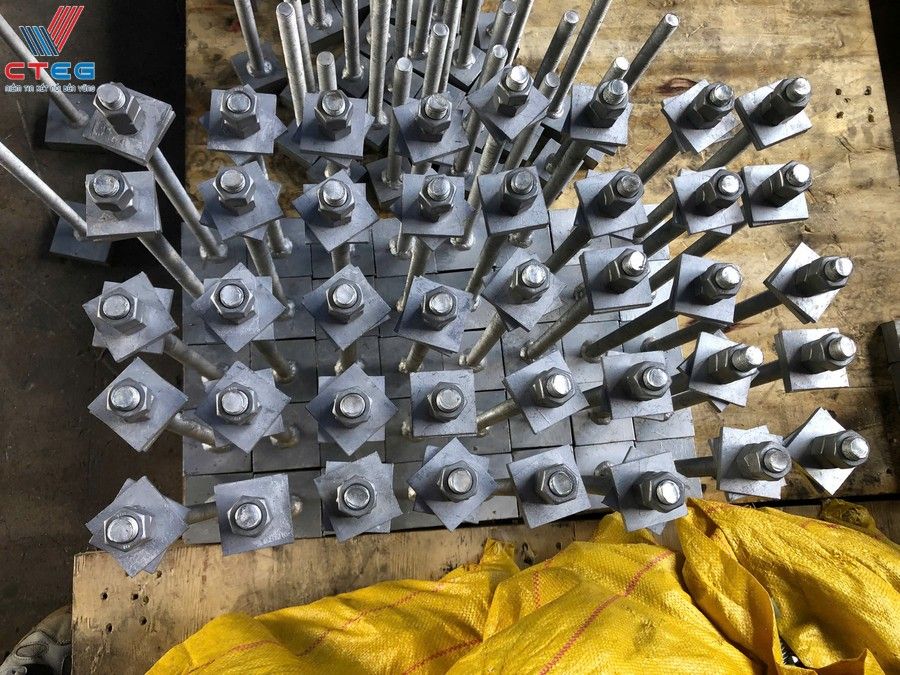
When we look at a monumental structure like the Long Thanh International Airport, our eyes are naturally drawn to the sweeping curves of the lotus-inspired roof or the vast expanse of the runways. However, for the project managers and engineers responsible for bringing this vision to life, the real story begins deep below the surface. The stability of these massive edifices rests—quite literally—on the integrity of their fastening systems. Anchor bolts are the unsung heroes of modern infrastructure, serving as the critical interface between the concrete foundation and the steel framework above. Without them, the grandest architectural designs would remain grounded only in theory, unable to withstand the physical realities of their environment.
Beyond Simple Fastening: The Physics of Load Distribution and Structural Stability
At its core, an anchor bolt is not merely a fastener; it is a load-transfer mechanism. In mega-projects, the primary function of these bolts is to facilitate the transfer of immense static and dynamic loads from the structural columns into the concrete foundation. This process relies on friction, mechanical interlock, and bonding.
When a steel column is erected, it exerts a tremendous downward force (compression). However, the real engineering challenge arises from uplift and shear forces. As the structure settles or shifts, the anchor bolts must distribute these stresses evenly across the foundation to prevent localized concrete failure. For a project the scale of a 4F-class airport, this involves calculating the tensile stress area of thousands of bolts to ensure that even under maximum load, the connection remains rigid. It is the physics of this “invisible strength” that allows soaring terminals to stand firm.
Resisting Environmental Forces: Wind, Seismic Activity, and Operational Vibrations
The challenge of securing a massive structure is compounded by the external forces it must endure. In a tropical climate like Vietnam’s, infrastructure must be designed to resist high-velocity typhoon winds and potential seismic activity. Anchor bolts act as the primary line of defense against these lateral and uplift forces.
Furthermore, an operational airport introduces constant vibration from heavy aircraft taxiing and taking off. These dynamic loads can lead to fatigue failure in inferior fasteners. High-quality anchor bolts are engineered to maintain their clamping force despite these continuous cycles of stress. By effectively anchoring the superstructure to the ground, they prevent the catastrophic “drift” or separation that can occur during a seismic event or severe storm, ensuring the safety of millions of passengers.
Engineering Precision: Types of Anchor Bolts Used in Massive Foundations
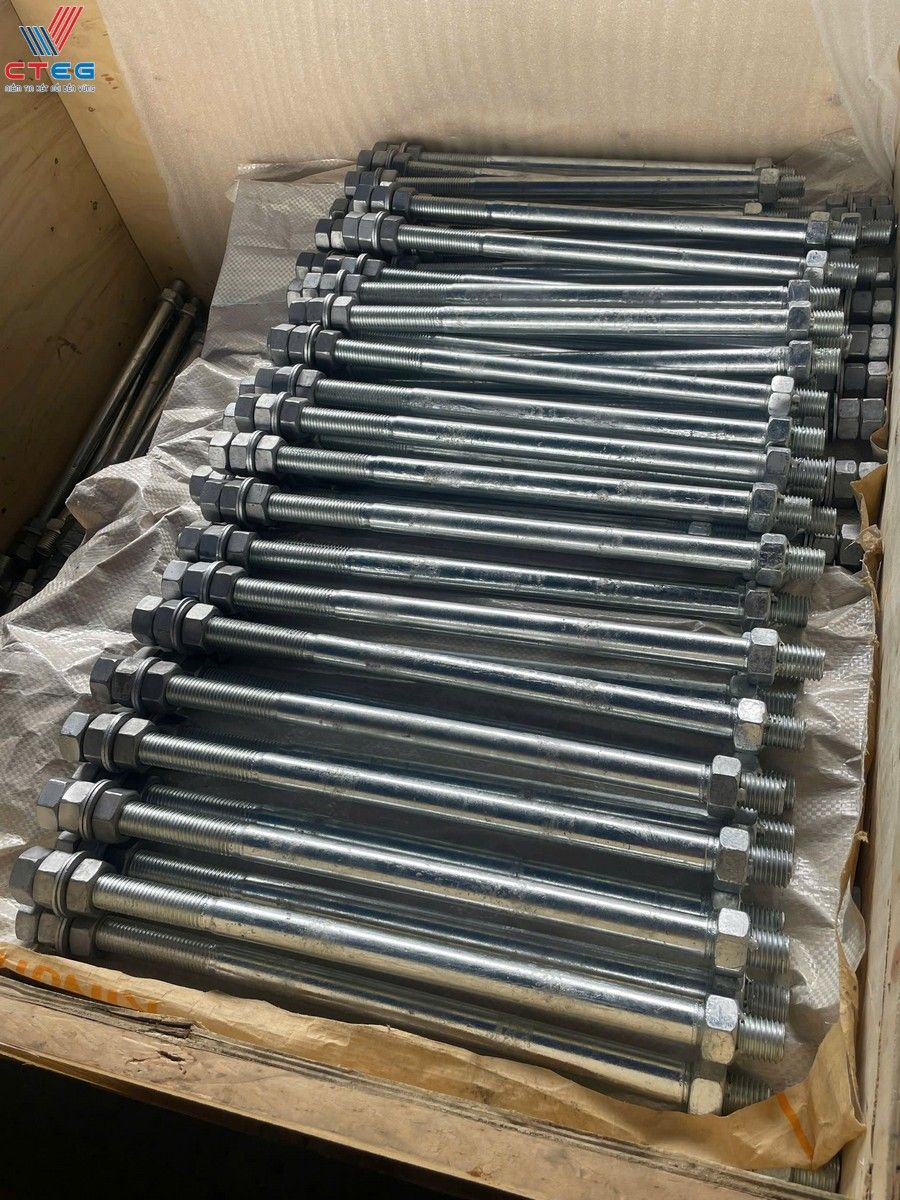
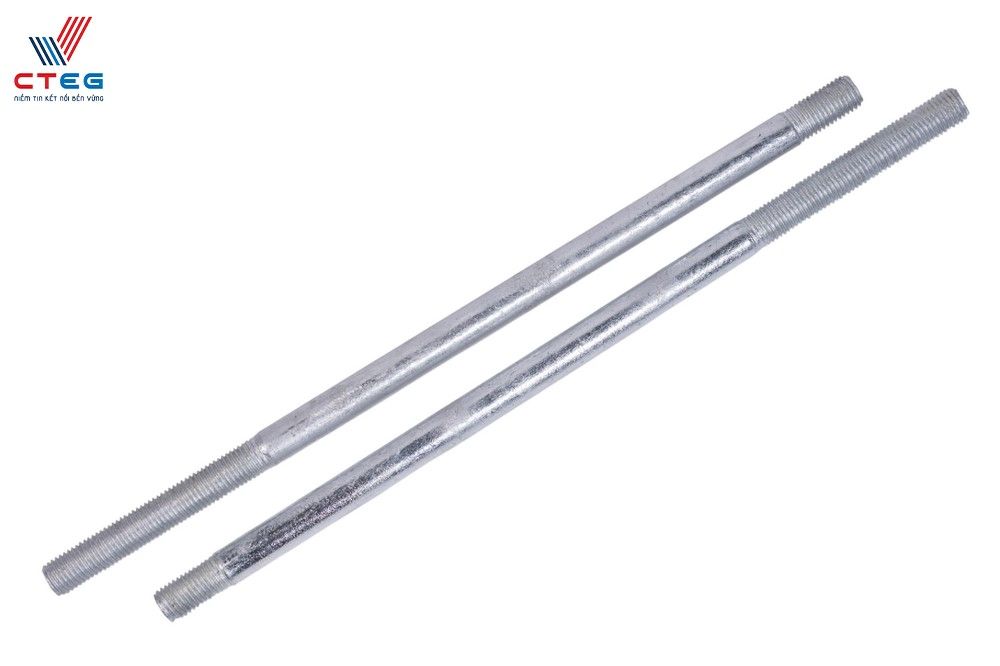
Selecting the right anchor bolt is not a matter of preference; it is a decision dictated by precise engineering calculations and the specific demands of the project. In the world of heavy construction, “one size fits all” is a recipe for disaster. Different structural elements require specific bolt geometries to maximize pull-out resistance and stability. At CTEG, we understand that the success of a project like the Long Thanh Airport depends on supplying the exact specification required for every unique joint and column.
Comparing J, L, and I-Type Bolts for Structural Integrity
The shape of an anchor bolt fundamentally dictates how it interacts with the concrete foundation. The three most common configurations—J, L, and I-type (straight)—each serve distinct structural purposes.
| Bolt Type | Shape Characteristics | Primary Application | Structural Advantage |
|---|---|---|---|
| L-Type (Bent Bar) | Bent at 90 degrees | Light poles, sign structures, general structural columns | Excellent resistance to uplift due to the mechanical interlock of the “hook” in concrete. |
| J-Type | Curved hook end | Heavy equipment mounting, specialized foundations | Provides strong anchorage but is often used where embedment depth is limited. |
| I-Type (Straight) | Straight threaded rod | Epoxy or chemical anchoring, retrofit projects | Versatile for post-installed applications where drilling and chemical bonding are required. |
For massive steel frameworks, L-type bolts are frequently preferred for their ability to lock deep into the reinforced concrete, providing the mechanical grounding necessary to resist the immense uplift forces generated by wind loads on large roof spans.
High-Tensile Strength: Why Grade 8.8 and 10.9 Matter for Heavy Industry
In standard residential construction, lower-grade bolts might suffice. However, for national mega-projects, the margin for error is zero. This is where high-tensile strength grades like 8.8 and 10.9 become critical. The numbers indicate the material’s ultimate tensile strength and yield strength. A Grade 8.8 bolt, for instance, has a tensile strength of 800 MPa and yields at 640 MPa.
Using these high-grade bolts allows engineers to achieve greater clamping force with fewer or smaller diameter bolts, optimizing the design of base plates. In the context of heavy industry, where equipment and structures weigh thousands of tons, Grade 8.8 and 10.9 bolts ensure that the connection will not deform plastically under peak loads, maintaining the structural integrity of the entire facility.
Material Science: Corrosion Resistance and the Importance of Hot-Dip Galvanizing
Strength is meaningless if the bolt corrodes away after a few years. Infrastructure projects are designed to last for decades, often in environments with high humidity or proximity to the coast. This makes material science and surface treatment a vital component of the manufacturing process.
Hot-dip galvanizing is the gold standard for corrosion protection in these applications. By immersing the steel bolts in molten zinc, a metallurgical bond is formed that provides a robust barrier against rust. For projects like the Long Thanh Airport, which is exposed to the tropical elements, CTEG prioritizes hot-dip galvanized bolts to ensure longevity. This treatment prevents the “cancer” of concrete—rust expansion—which can crack foundations and compromise the safety of the entire structure.
Case Study: Securing the Lotus-Inspired Terminal of Long Thanh International Airport
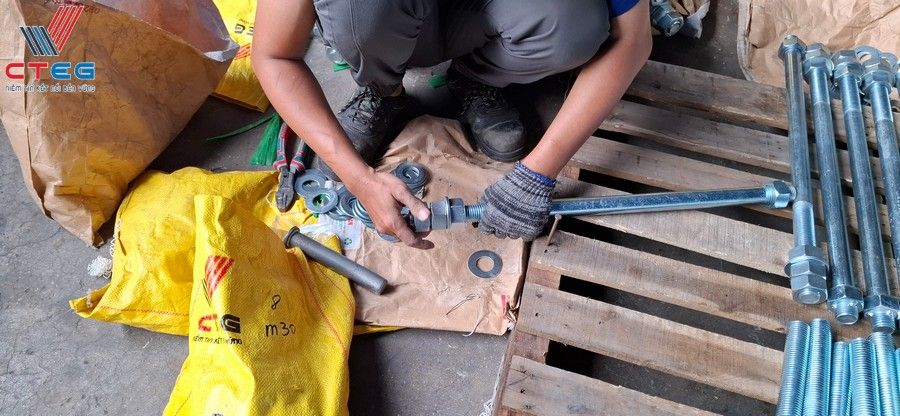
The Long Thanh International Airport is not just a construction project; it is a symbol of Vietnam’s rising stature on the global stage. Designed to serve as a 4F-class international aviation hub, it aims to alleviate the pressure on Tan Son Nhat and drive economic growth across the region. The crown jewel of this project is the passenger terminal, featuring a breathtaking design inspired by the lotus flower. But beneath the aesthetic beauty of the lotus petals lies a complex skeleton of steel, all of which depends on the unyielding grip of precision-engineered anchor bolts.
The Scale of Fastening: Managing Thousands of Critical Joints in a 4F-Class Hub
The sheer scale of the Long Thanh terminal is difficult to overstate. The roof structure alone spans vast distances to create the open, airy feel of the lotus design. This architectural marvel requires a steel framework of immense weight and complexity. Every column that supports this roof must be anchored with absolute precision. We are not talking about a few dozen bolts; we are talking about tens of thousands of critical joints, each requiring a specific set of anchor bolts ranging from M24 to M64 diameters.
For the contractors involved, the challenge is logistical as well as technical. A delay in the supply of a specific bolt size can halt the erection of an entire section of the terminal. The “Needs Met” goal here is absolute reliability. The anchor bolts must be available on-site, in the exact quantities and grades specified, to keep the project on its tight timeline. This is where the reliability of the supply chain becomes as critical as the steel itself.
Supporting the Steel Framework: Precision Engineering for Vietnam’s Future Aviation Hub
The lotus petal design introduces unique engineering challenges. The roof’s curvature creates complex vector forces—wind loads do not just push sideways; they create uplift and twisting moments that vary across the structure. The anchor bolts used here are not off-the-shelf hardware. They are often custom-fabricated to meet stringent design criteria that account for these multi-directional stresses.
CTEG’s role in such high-profile projects involves supplying bolts that meet rigorous testing standards. For the steel framework of the terminal, high-tensile anchor bolts (Grade 8.8 and above) are essential to handle the dynamic loads of wind and the static load of the massive steel trusses. The precision of the thread, the quality of the nut fit, and the durability of the galvanization are all scrutinized. In this context, the anchor bolt is the foundational link that ensures the lotus flower remains in bloom for generations, safe from the forces of nature.
Behind the Scenes: Logistics and Supply Chain Management for National Mega-Projects
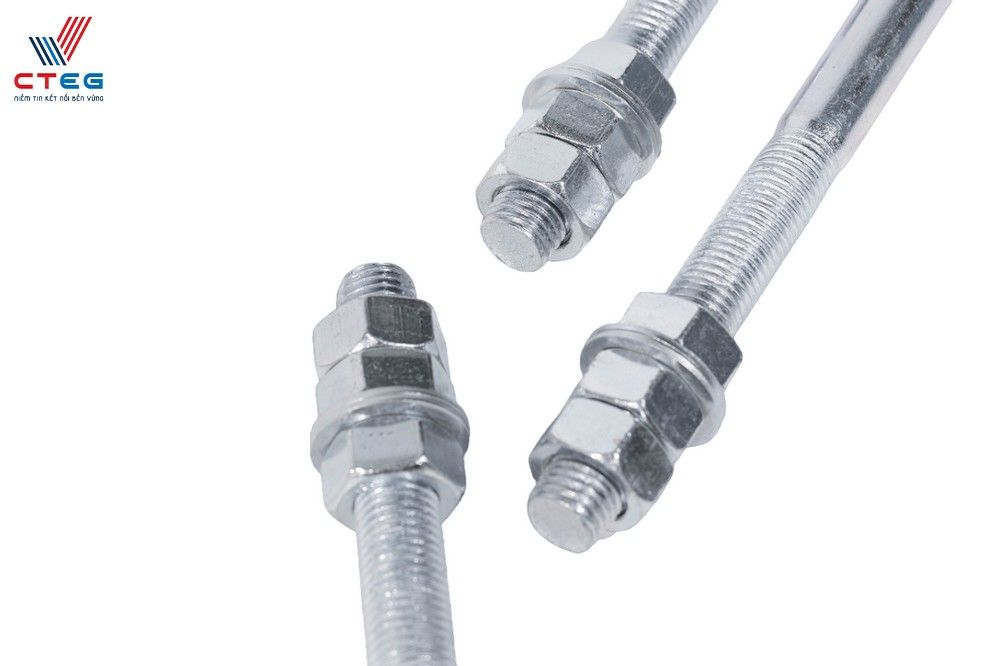
While engineering defines the “what,” logistics defines the “how.” Supplying a mega-project is a high-stakes operation where timing is everything. A construction site with hundreds of workers and cranes cannot afford to stand idle waiting for a shipment of fasteners. This is where the capability of the supplier transforms from a vendor relationship into a strategic partnership. Managing the supply chain for national infrastructure requires a sophisticated approach that goes far beyond simple warehousing.
From Factory to Site: CTEG’s Approach to Large-Scale Supply Logistics
At CTEG, we have refined our logistics to match the tempo of Vietnam’s fastest-moving projects. Our philosophy of “Chất lượng – Uy tín – Tận tâm” (Quality – Prestige – Dedication) extends to how we manage our inventory and deliveries. Utilizing an advanced ERP (Enterprise Resource Planning) system, we track every batch of raw material from the moment it enters our factory to the moment the finished bolts arrive at the construction site.
This digital management allows us to forecast demand and maintain a large stock of semi-finished and finished goods in our Ho Chi Minh City warehouse. For a project manager, this means we can respond to urgent site requests with agility. Whether it’s a sudden need for additional M36 anchor bolts or a scheduled delivery of tons of structural fasteners, our logistics team ensures that the “invisible strength” arrives exactly when and where it is needed, preventing costly bottlenecks.
Case Study: Supplying the LEGO Factory and Renewable Energy Projects
Our logistical prowess is not limited to aviation. CTEG has been a trusted partner for other landmark projects, such as the new LEGO factory in Binh Duong and various renewable energy projects across the Central Highlands. The LEGO factory, a beacon of sustainable manufacturing, required a massive volume of connection materials delivered under strict sustainability and safety protocols.
Similarly, wind and solar power projects present unique logistical hurdles, often located in remote, difficult-to-access terrains. Supplying anchor bolts for wind turbine foundations requires not only high-grade products (often Grade 10.9 for turbine bases) but also a delivery network capable of reaching these remote sites reliably. Our experience in these diverse sectors proves that we don’t just sell bolts; we deliver the peace of mind that comes with a secure supply chain.
Quality Assurance and Compliance: Ensuring Safety in Critical Infrastructure
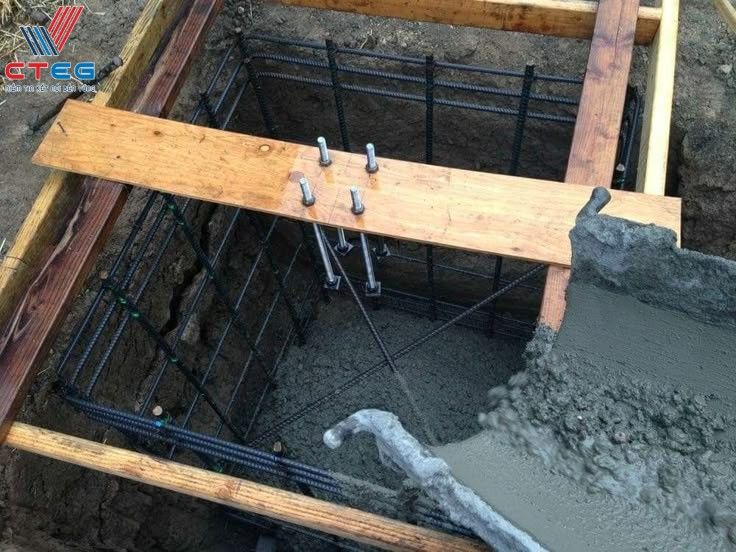
In the construction of critical infrastructure, trust is good, but verification is mandatory. The failure of a single anchor bolt in a critical load-bearing column could have catastrophic consequences. Therefore, quality assurance is not a final check; it is an embedded process that begins with the selection of raw materials and continues through every step of manufacturing. For project owners and contractors, the assurance of safety lies in the documentation and testing that accompanies every shipment.
The Importance of CO/CQ and International Standards (DIN, ASTM, JIS)
A bolt is only as good as the standard it is built to. At CTEG, we strictly adhere to international standards such as DIN (Germany), ASTM (USA), and JIS (Japan), alongside Vietnam’s TCVN. These standards dictate everything from the chemical composition of the steel to the precise geometry of the threads.
Every batch of anchor bolts we supply is accompanied by CO (Certificate of Origin) and CQ (Certificate of Quality). These documents are the “birth certificate” and “health record” of the product. They prove that the steel used is genuine and that the finished product has passed rigorous tensile and yield strength tests. For a project like Long Thanh Airport, these certificates are non-negotiable, providing the legal and technical assurance that the materials meet the global safety benchmarks required for a 4F-class hub.
Precision Installation: Avoiding Structural Failure through Technical Rigor
Even the highest quality bolt can fail if installed incorrectly. Structural failure often stems not from the material itself, but from improper installation techniques—such as incorrect torque application or insufficient embedment depth. This is why technical rigor is paramount.
“Quality is not an act, it is a habit. In our industry, that habit saves lives.” CTEG Technical Director
We advise our partners on the precise installation protocols required for our products. This includes ensuring the concrete has cured sufficiently before loading, using the correct washers to distribute pressure, and applying the exact torque specified by the design engineers. By combining top-tier manufacturing with technical support, we help contractors avoid the common pitfalls that compromise structural integrity, ensuring that the foundation remains secure for the lifespan of the project.
Frequently Asked Questions (FAQ)
What is the difference between Grade 4.6, 5.6, and 8.8 anchor bolts?
The grade refers to the tensile strength of the steel. Grade 4.6 and 5.6 are mild steel bolts used for standard construction with lower load requirements. Grade 8.8 is high-tensile steel, capable of withstanding significantly higher stress, making it essential for heavy industrial projects, high-rise buildings, and mega-structures like airports.
Why are anchor bolts critical for the Long Thanh Airport project?
The airport features massive steel roof structures and heavy operational loads. Anchor bolts are the primary mechanism securing these structures to the foundation, resisting wind uplift, seismic forces, and the vibrations caused by aircraft, ensuring the terminal’s stability and safety.
Does CTEG provide custom anchor bolts for specific project requirements?
Yes, CTEG specializes in manufacturing anchor bolts according to specific technical drawings. We can produce bolts in various shapes (J, L, I, U, V), diameters (M12-M64), and grades to meet the unique engineering demands of any project.
What surface treatments are best for anchor bolts in tropical climates?
Hot-dip galvanizing is the most effective treatment for tropical climates like Vietnam. It creates a thick, durable zinc coating that metallurgically bonds to the steel, providing superior long-term protection against corrosion and rust in humid environments.
How does CTEG ensure the quality of its products?
We implement a strict quality control process governed by ISO 9001:2015. All products undergo testing for tensile strength and material composition. We provide full CO/CQ documentation and factory test certificates with every shipment to guarantee compliance with international standards.
Conclusion: The Future of Vietnam’s Infrastructure and the Role of Quality Fasteners
As Vietnam continues its rapid development, projects like the Long Thanh International Airport stand as testaments to the nation’s ambition and engineering capability. These mega-structures are more than just concrete and steel; they are the foundations of our economic future. At CTEG, we are proud to contribute the “invisible strength” that holds these visions together. By prioritizing quality, precision, and reliable logistics, we ensure that Vietnam’s infrastructure is built to last. For your next project, trust in a partner who understands that the safety of the entire structure begins with the integrity of a single bolt.

Có thể bạn quan tâm
Những lưu ý quan trọng khi lựa chọn bu lông neo chữ L cho dự án
Real-World Applications of J-Type Anchor Bolts in Major Infrastructure: A Comprehensive Guide
The Engineering Backbone: How Anchor Bolts Secure Mega-Structures Like Long Thanh International Airport
Tại sao bu lông neo chữ L là lựa chọn hàng đầu cho móng công trình?