Table of Contents
- Understanding Anchor Bolts: The Foundation of Structural Stability
- A Detailed Breakdown of Anchor Bolt Shapes and Their Unique Functions
- Selecting the Right Anchor Bolt: Load-Bearing and Engineering Considerations
- Custom Fabrication at CTEG: Precision Engineering for Large-Scale Projects
- Installation Methods: Comparing Cast-in-Place and Post-Installed Anchors
- Comparative Analysis: Choosing the Best Bolt for Your Base Material
- Frequently Asked Questions (FAQ) About Anchor Bolt Selection
- Conclusion: Ensuring Long-Term Durability with Quality Fasteners from CTEG
- Comprehensive Shape Analysis: Understand the specific engineering advantages of J, L, V, U, and I-shaped anchor bolts for different structural loads.
- Material & Grade Selection: Learn how to choose between carbon steel and high-strength grades (8.8, 10.9) based on ASTM, DIN, and JIS standards.
- Custom Fabrication Expertise: Discover CTEG’s capability to manufacture bespoke anchor bolts from M12 to M64 at the Xuyen A Industrial Park factory.
- Installation Best Practices: Compare cast-in-place versus post-installed methods to determine the best fit for your construction schedule and base material.
- Quality Assurance: Ensure project safety with fasteners backed by full CO/CQ certification and rigorous tensile testing.
Understanding Anchor Bolts: The Foundation of Structural Stability
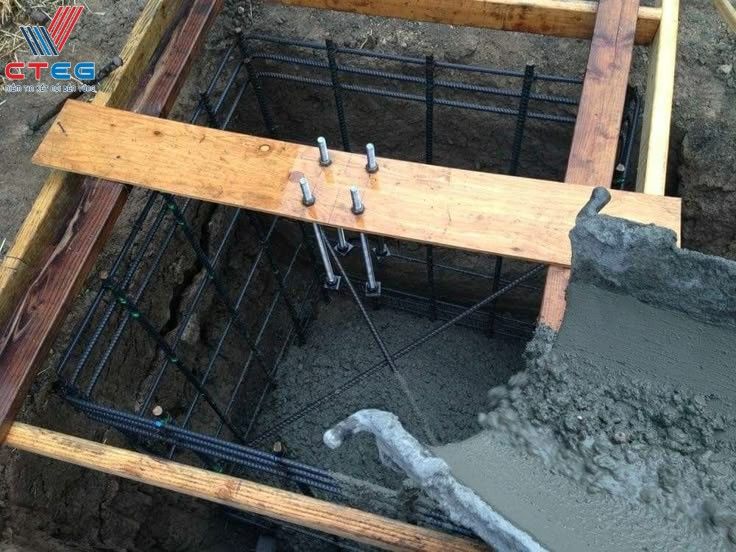
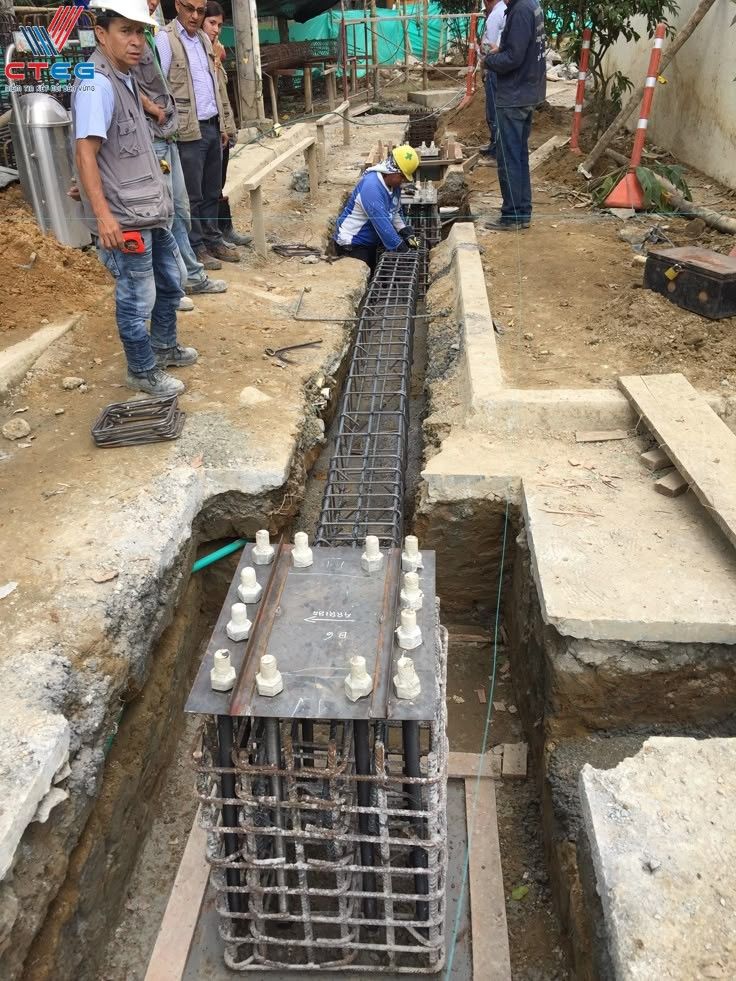
In the complex world of heavy construction and industrial engineering, the stability of a superstructure is only as reliable as its connection to the foundation. Anchor bolts, often referred to as foundation bolts, serve as this critical interface. They are not merely fasteners; they are the primary load-transfer mechanism that secures structural elements—such as steel columns, light poles, and heavy machinery—to concrete bases. By effectively managing both tensile forces (pull-out) and shear forces (sliding), these components ensure that buildings and equipment remain static even under extreme stress.
Features: At their core, anchor bolts are heavy-duty fasteners designed with a threaded end for nuts and washers, and an embedded end that anchors into the concrete substrate.
Advantages: This dual-ended design allows for the precise leveling of structures while simultaneously creating a mechanical bond deep within the foundation that resists uplift and lateral movement.
Benefits: For project managers and engineers, utilizing high-quality anchor bolts means guaranteeing the long-term safety and durability of the project, preventing catastrophic structural failures caused by wind, seismic activity, or vibration.
At Cường Thịnh (CTEG), we understand that every project, from the LEGO Factory in Binh Duong to the Long Thanh International Airport, relies on this fundamental stability. As a leading provider of fastening solutions in Vietnam since 2011, we emphasize that selecting the right anchor bolt is the first step toward a successful build.
A Detailed Breakdown of Anchor Bolt Shapes and Their Unique Functions
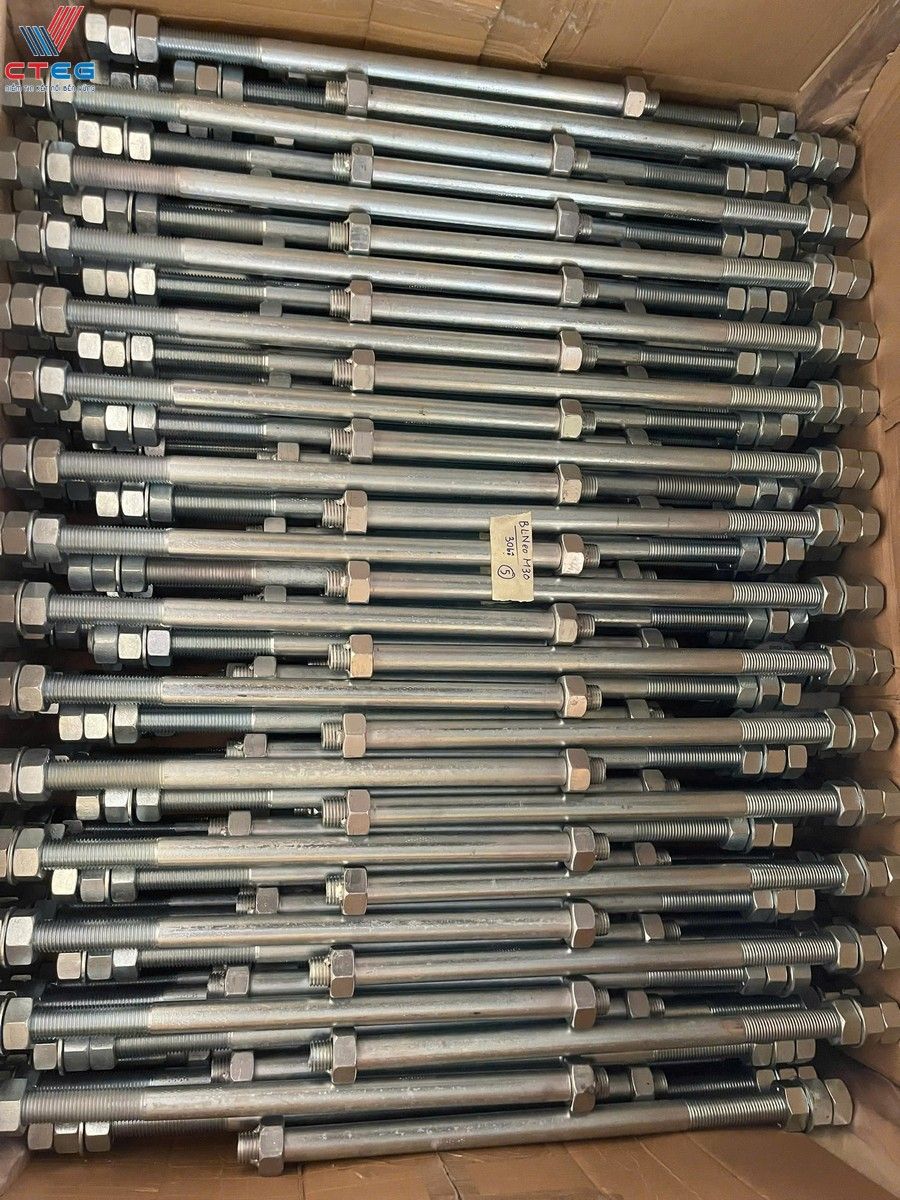
Anchor bolts are not a “one-size-fits-all” solution. The geometry of the bolt is engineered specifically to handle different types of loads and installation environments. Understanding the distinct shapes available is crucial for optimizing the structural integrity of your specific application.
Features: The industry categorizes anchor bolts primarily by their shape, with the most common being J, L, V, U, and straight I-bolts. Each configuration offers a different method of engaging with the concrete or the object being secured.
Advantages: The variation in shape allows engineers to tailor the “pull-out” resistance mechanism. For instance, a bent bolt relies on the mechanical interlock of the hook against the concrete, whereas a straight bolt might rely on friction or a chemical bond.
Benefits: By matching the bolt shape to the specific foundation requirements, contractors can achieve maximum holding power without over-engineering the solution, resulting in cost efficiency and enhanced safety.
J-Bolts: Optimized Hooking for Rebar and Concrete Foundations
J-bolts are among the most recognizable anchor bolts in the construction industry, named for their distinct hook shape that resembles the letter ‘J’.
Features: These bolts consist of a threaded top section and a bottom section bent into a hook. They are typically cast-in-place, meaning they are set into the wet concrete before it cures.
Advantages: The primary engineering advantage of the J-bolt is the hook itself. When the concrete hardens around the bent end, it creates a substantial mechanical interlock. This hook can also be positioned to hook around existing rebar within the foundation, further integrating the bolt into the reinforced concrete matrix.
Benefits: This design provides excellent resistance to pull-out forces, making J-bolts a preferred choice for securing structural columns, heavy equipment, and wall plates in residential and commercial construction. For the user, this translates to a secure, immovable connection that leverages the mass of the foundation itself.
L-Bolts: The Industry Standard for Sill Plates and Structural Columns
Similar to J-bolts but with a distinct 90-degree bend, L-bolts are a staple in general construction, particularly for anchoring light poles and securing the sill plates of buildings.
Features: The L-bolt features a threaded end and a smooth end bent at a right angle. Like the J-bolt, it is designed for cast-in-place applications.
Advantages: The 90-degree bend provides a robust surface area that bears against the concrete, preventing the bolt from being pulled straight out. Additionally, the shape prevents the bolt from rotating when the nut is tightened on the surface, a common frustration during installation.
Benefits: This anti-rotation feature significantly speeds up the installation process for contractors, reducing labor time. Furthermore, L-bolts offer a high degree of reliability for securing vertical structures like signposts and steel columns, ensuring they remain upright and secure against wind loads and other lateral forces.
V-Bolts and U-Bolts: Specialized Solutions for Piping and Heavy Equipment
While J and L bolts are primarily used for structural anchoring into concrete, V-bolts and U-bolts serve a more specialized role, often acting as clamps or guides in industrial settings.
Features: U-bolts are bent in the shape of the letter ‘U’ with threads on both ends, while V-bolts have a sharper, V-shaped bend. These are often used in conjunction with plates or brackets.
Advantages: The dual-threaded design allows these bolts to encircle piping, conduit, or round structural members, securing them firmly to a support structure. The shape distributes the clamping force evenly around the circumference of the object being held.
Benefits: In industrial plants and MEP (Mechanical, Electrical, and Plumbing) installations, these bolts are essential for preventing lateral movement of pipes due to thermal expansion or fluid vibration. Using the correct U or V-bolt ensures that critical infrastructure remains aligned and secure, preventing leaks or disconnects that could lead to costly downtime.
Straight I-Bolts: Maximum Versatility in High-Strength Applications
Straight anchor bolts, often referred to as I-bolts or threaded rods, offer a different approach to anchoring, prioritizing versatility and high tensile strength.
Features: These are straight rods, threaded either partially or fully along their length. They do not have a bent end; instead, they often utilize a nut and washer plate embedded in the concrete to provide pull-out resistance, or they are used with chemical adhesives (epoxy).
Advantages: The straight geometry allows for extremely deep embedment depths, which is critical for heavy-load applications. When used with a tack-welded plate or heavy nut at the bottom, they offer superior load distribution compared to bent bolts. They are also the primary choice for post-installed applications using epoxy.
Benefits: For engineers dealing with high-stress projects like wind turbine foundations or heavy machinery bases, straight I-bolts provide the highest tensile capacity. They offer the flexibility to be installed after the concrete has cured (using chemicals) or cast in place for maximum strength, providing a solution for almost any project phase.
Selecting the Right Anchor Bolt: Load-Bearing and Engineering Considerations
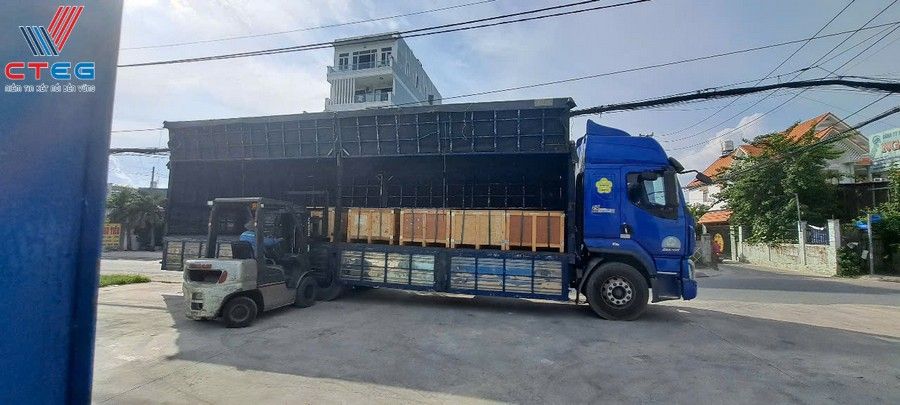
Choosing the correct anchor bolt is not merely a matter of picking a shape; it is a calculated engineering decision that directly impacts the safety of the structure. At CTEG, we advise our partners to look beyond basic dimensions and consider the complex interplay of forces and environmental factors.
Features: The selection process must account for the magnitude of the load, the type of load (static vs. dynamic), the base material strength, and the environmental conditions (corrosive vs. dry).
Advantages: By conducting a thorough analysis of these factors, engineers can select a bolt with the precise tensile and shear capacity required. For example, a project in a coastal area would necessitate hot-dip galvanized coatings, whereas a heavy industrial machine might require high-strength alloy steel.
Benefits: The ultimate benefit of this rigorous selection process is the prevention of failure. A properly selected anchor bolt ensures that the structure performs as designed for its entire lifespan. It eliminates the risk of bolt fatigue, corrosion-induced failure, or pull-out during seismic events. For the contractor, this means compliance with safety codes; for the investor, it means asset protection.
Tensile vs. Shear Strength: Matching Bolt Shape to Stress Requirements
When specifying anchor bolts, understanding the difference between tensile and shear forces is paramount.
Features: Tensile strength refers to the bolt’s ability to resist being pulled apart or pulled out of the concrete vertically. Shear strength is the bolt’s ability to resist forces acting perpendicular to its axis, such as a wind load pushing a building sideways.
Advantages: Different bolt shapes and diameters handle these forces differently. A headed bolt or a straight bolt with a plate generally offers higher tensile strength than a simple bent bolt because the bearing area is larger. Conversely, shear strength is largely determined by the bolt’s diameter and material grade.
Benefits: By accurately matching the bolt type to the dominant stress vectors, engineers ensure structural integrity. For instance, using a high-tensile straight bolt for a column subject to significant uplift ensures the column stays grounded, while a thick-diameter shear lug might be added to handle lateral shifts. This targeted approach optimizes material usage and guarantees safety.
Material Selection: From Carbon Steel to High-Strength 8.8 and 10.9 Grades
The geometry of the bolt is only half the equation; the material composition defines its ultimate strength and durability.
Features: CTEG offers anchor bolts in a wide range of grades, from standard carbon steel (Grades 4.6, 5.6) to high-strength alloy steels (Grades 8.8, 10.9). We also provide various finishes, including plain (black), electro-galvanized, and hot-dip galvanized.
Advantages: Higher grade numbers indicate higher tensile and yield strengths. A Grade 8.8 bolt can withstand significantly more force than a Grade 4.6 bolt of the same diameter. Hot-dip galvanizing provides a thick zinc coating that sacrifices itself to protect the steel from rust.
Benefits: Selecting the appropriate grade allows for cost-effective engineering. You don’t need expensive high-strength bolts for light-duty applications, but you absolutely need them for critical infrastructure. Using the correct corrosion-resistant finish ensures that the bolt maintains its strength over decades, even in harsh Vietnamese climates, reducing maintenance costs and liability.
Custom Fabrication at CTEG: Precision Engineering for Large-Scale Projects
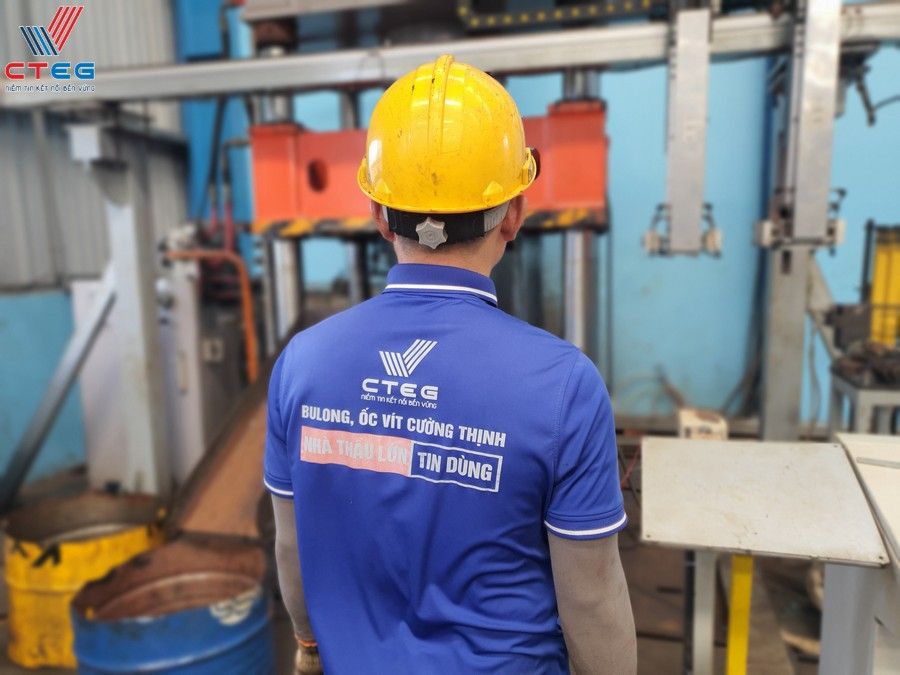
Standard off-the-shelf bolts are sufficient for many applications, but major infrastructure projects often demand specific lengths, diameters, and material properties that fall outside standard catalogs. This is where CTEG’s custom fabrication capabilities become a decisive asset.
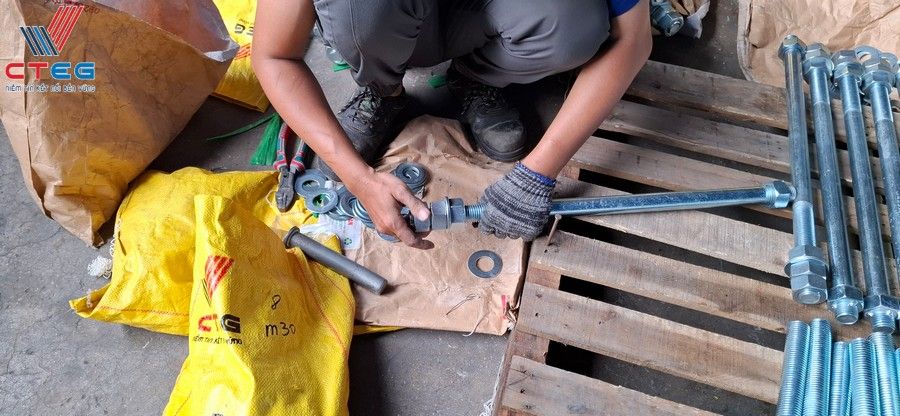
Features: We specialize in manufacturing anchor bolts tailored exactly to the technical drawings provided by our clients. Our capabilities range from M12 to M64 diameters, covering everything from small pre-engineered steel buildings to massive wind power foundations.
Advantages: Custom fabrication allows for total control over the bolt’s specifications, including thread length, bend angle, and steel grade. We can produce non-standard sizes that perfectly integrate with unique architectural designs or complex machinery footprints.
Benefits: For the contractor, this eliminates the need for on-site modifications, which can compromise bolt integrity. Receiving a product that fits perfectly right out of the box accelerates construction timelines and ensures that the “as-built” structure matches the design intent perfectly. CTEG’s dedication to “Quality – Prestige – Dedication” ensures your custom orders are handled with precision.
Inside the Xuyen A Industrial Park Factory: Our Advanced Manufacturing Process
Our commitment to quality is physically manifested in our state-of-the-art manufacturing facility located in the Xuyen A Industrial Park, Tay Ninh.
Features: The factory is equipped with modern machinery for cutting, threading, bending, and heat-treating steel. We manage our operations using an advanced ERP system that tracks every stage of production, from raw material intake to final shipment.
Advantages: This technological integration ensures high-speed production without sacrificing precision. The ERP system allows us to maintain strict inventory control and provide accurate lead times, ensuring that large orders for projects like the Long Thanh Airport are delivered on schedule.
Benefits: For our partners, this means reliability. You are not dealing with a middleman but a direct manufacturer with full control over the supply chain. This results in consistent product quality, competitive pricing, and the ability to rapidly scale production to meet the urgent demands of large-scale industrial projects.
Compliance with International Standards: Adhering to DIN, ASTM, and JIS
In the construction industry, trust is built on certification. CTEG ensures that every bolt we produce meets rigorous international benchmarks.
Features: We manufacture anchor bolts in strict accordance with standards such as DIN (Germany), ASTM (USA), JIS (Japan), and TCVN (Vietnam). Every batch is subjected to tensile testing and quality checks.
Advantages: Adhering to these standards guarantees that the mechanical properties of the bolts—such as yield strength, elongation, and hardness—are consistent and predictable.
Benefits: We provide full documentation, including CO (Certificate of Origin) and CQ (Certificate of Quality), as well as factory test certificates for every shipment. This transparency provides project owners and inspectors with the assurance that the materials used are safe, legal, and compliant with all engineering specifications. It removes the risk of using substandard materials that could jeopardize the project’s acceptance.
Installation Methods: Comparing Cast-in-Place and Post-Installed Anchors
The method of installation is a critical factor that influences both the choice of bolt and the construction schedule. Generally, anchor bolts are installed via two primary methods: cast-in-place or post-installed.
Features:
Cast-in-Place: Bolts (typically J or L types) are positioned in the formwork before the concrete is poured. They are held in place by templates to ensure alignment.
Post-Installed: Holes are drilled into cured concrete, and bolts (typically straight rods or specialized expansion anchors) are inserted and secured using chemical adhesives or mechanical expansion.
Advantages:
Cast-in-place anchors offer the highest load capacities because they are integral to the foundation. They are generally less expensive in terms of material cost. Post-installed anchors, however, offer incredible flexibility. They allow for adjustments if the machinery layout changes or if errors were made during the concrete pour.
Benefits:
Understanding these methods allows project managers to optimize their workflow. Using cast-in-place bolts for primary structural columns ensures maximum stability and cost-efficiency. Reserving post-installed methods for secondary equipment or retrofitting projects provides the agility needed to handle unforeseen site conditions without halting progress.
Comparative Analysis: Choosing the Best Bolt for Your Base Material
To assist in making the right decision, the following table compares common anchor bolt types against suitable applications and base materials.
| Bolt Type | Shape | Primary Application | Installation Method | Key Benefit |
|---|---|---|---|---|
| J-Bolt | Hooked | Structural columns, residential foundations | Cast-in-Place | Excellent mechanical interlock with concrete. |
| L-Bolt | 90° Bend | Light poles, sill plates, sign posts | Cast-in-Place | Prevents rotation during tightening. |
| Straight (I-Bolt) | Straight Rod | Heavy machinery, high-load columns | Cast-in/Post-Installed | Highest tensile strength; versatile installation. |
| U-Bolt | U-Shape | Piping support, round conduits | Clamp/Guide | Secures round objects; prevents lateral movement. |
Features: This comparison highlights the distinct mechanical characteristics of each bolt type.
Advantages: It provides a quick reference for engineers to match the bolt to the specific needs of the substrate (concrete vs. holding a pipe) and the load type.
Benefits: Using this guide helps prevent misapplication—such as using a light-duty J-bolt where a high-tensile straight bolt is required—thereby ensuring the safety and longevity of the installation.
Frequently Asked Questions (FAQ) About Anchor Bolt Selection
What is the difference between Grade 4.6 and Grade 8.8 anchor bolts?
The grade refers to the tensile strength of the steel. Grade 4.6 is mild steel, suitable for light to medium loads. Grade 8.8 is high-strength steel, capable of withstanding significantly higher tensile and shear forces, making it essential for heavy structural applications and dynamic loads.
Can I weld anchor bolts to the rebar cage?
Generally, welding anchor bolts to rebar is not recommended unless the bolt material is specifically weldable (like ASTM F1554 Grade 36). Welding high-strength heat-treated bolts (like Grade 10.9) can alter their microstructure and weaken them, leading to potential failure.
How do I prevent anchor bolts from rusting?
For environments exposed to moisture or chemicals, Hot-Dip Galvanizing is the best protection. It creates a durable zinc coating. For indoor or dry environments, electro-galvanizing or simple black (plain) finishes may suffice, but outdoor projects should always prioritize corrosion resistance.
What documents should I expect when purchasing anchor bolts?
Reputable manufacturers like CTEG will always provide a Mill Test Certificate (MTC), Certificate of Origin (CO), and Certificate of Quality (CQ). These documents verify the chemical composition and mechanical properties of the bolts, ensuring they meet the specified standards.
Conclusion: Ensuring Long-Term Durability with Quality Fasteners from CTEG
The integrity of any structure begins at the foundation. Whether you are securing a pre-engineered steel building or installing massive wind turbines, the choice of anchor bolt is a decision that echoes through the lifespan of the project. By understanding the specific functions of J, L, V, U, and I-bolts, and selecting the appropriate materials and grades, you ensure safety and stability.
At Cường Thịnh (CTEG), we are more than just a supplier; we are a partner in your success. With our advanced manufacturing capabilities at Xuyen A Industrial Park, strict adherence to international standards, and a track record of serving Vietnam’s most critical projects, we are dedicated to providing “Quality – Prestige – Dedication.” Contact us today to discuss how our custom fabrication solutions can meet the unique demands of your next project.

Có thể bạn quan tâm
Những lưu ý quan trọng khi lựa chọn bu lông neo chữ L cho dự án
Real-World Applications of J-Type Anchor Bolts in Major Infrastructure: A Comprehensive Guide
The Engineering Backbone: How Anchor Bolts Secure Mega-Structures Like Long Thanh International Airport
Tại sao bu lông neo chữ L là lựa chọn hàng đầu cho móng công trình?