Table of Contents
- Introduction to J-Type Anchor Bolts in Modern Engineering
- The Mechanics of Stability: Why J-Type Bolts are Essential for Infrastructure
- Securing Industrial Giants: J-Type Bolts in Steel Structures and Factories
- Powering the Future: J-Type Anchor Bolts in Wind and Solar Energy
- Transportation Infrastructure: Bridges, Airports, and Highway Signage
- Technical Specifications and Material Selection for High-Load Projects
- Comparing J-Type vs. L-Type and Straight Anchor Bolts: Which to Choose?
- Best Practices for Installation and Long-Term Maintenance
- Frequently Asked Questions (FAQ) about J-Type Anchor Bolts
- Conclusion: The Future of Anchoring in Large-Scale Infrastructure
- Critical Stability: J-type anchor bolts provide essential pull-out resistance for high-stress infrastructure, from wind turbines to heavy industrial plants.
- Proven Performance: Real-world applications in major projects like the LEGO Factory (Binh Duong) and Long Thanh International Airport demonstrate their reliability.
- Technical Versatility: Available in grades ranging from 4.6 to 10.9 and sizes M12-M64, tailored for specific load requirements and environmental conditions.
- Durability Standards: Hot-dip galvanizing and adherence to international standards (DIN, ASTM, JIS, TCVN) ensure long-term structural integrity against corrosion.
- Expert Manufacturing: Cường Thịnh (CTEG) leads the market in supplying precision-engineered anchor bolts for Vietnam’s most demanding construction challenges.
Introduction to J-Type Anchor Bolts in Modern Engineering
Imagine the immense forces acting upon a towering wind turbine during a storm, or the constant, rhythmic vibrations of heavy machinery in a sprawling manufacturing plant. The structural integrity of these engineering marvels does not rely solely on the steel beams visible to the eye, but on the unseen heroes embedded deep within the concrete foundation: the anchor bolts. Among these, J-type anchor bolts stand out as a critical component in modern infrastructure, bridging the gap between static concrete and dynamic steel structures.
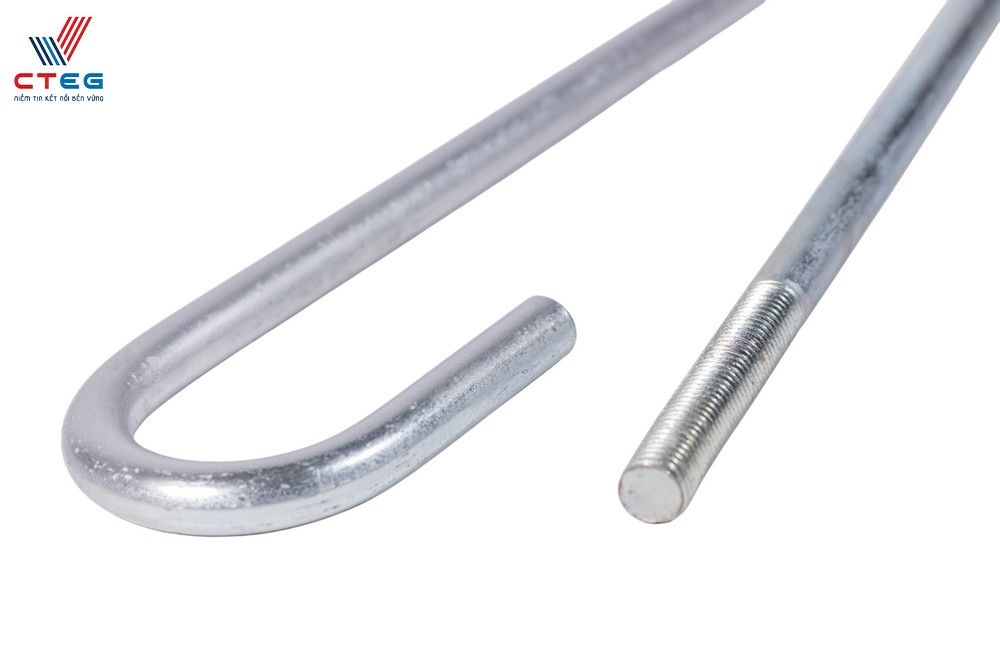
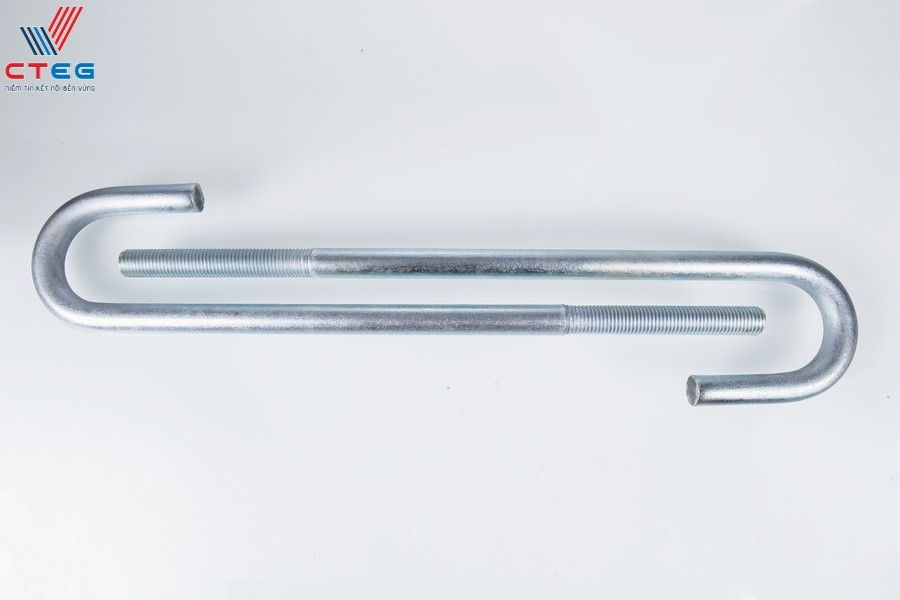
At Cường Thịnh (CTEG), we understand that the stability of a project—whether it is a pre-engineered steel factory or a national airport—begins at the anchor point. J-type bolts, characterized by their hooked end, are specifically engineered to resist pull-out forces, ensuring that columns and equipment remain securely fastened even under extreme stress. As we explore the real-world applications of these fasteners, we promise to reveal how selecting the right specification—from Grade 4.6 to high-strength 10.9—can define the safety and longevity of your project. This is not just about bolts; it is about the foundation of modern development.
The Mechanics of Stability: Why J-Type Bolts are Essential for Infrastructure
To appreciate the value of J-type anchor bolts, one must first understand the mechanics of stability they provide. In civil engineering, the connection between a steel column and a concrete foundation is a point of critical vulnerability. This interface must transfer various loads—axial tension (uplift), shear (sliding), and moment (bending)—safely into the ground. The J-type bolt is designed specifically to handle these complex force interactions.
Unlike straight rods which rely solely on friction or chemical adhesion, the geometry of the J-bolt creates a mechanical interlock. When concrete is poured and cures around the bent “hook” of the bolt, it creates a solid anchor that physically prevents the bolt from being pulled out. This design is particularly vital in “tension zones” where wind or seismic activity might attempt to lift a structure off its base. For engineers and contractors, the promise of the J-bolt is simple: it converts the mass of the foundation into a counterweight against uplift, securing the structure above. At CTEG, we manufacture these bolts to precise standards (DIN, ASTM, JIS), ensuring that the mechanical properties of the steel align perfectly with the design requirements of the concrete foundation.
Superior Pull-Out Resistance through Hook Design
The defining feature of the J-type bolt is its hook, typically bent at 90 degrees or greater depending on the standard. This hook is not merely a shape; it is a functional anchor mechanism. When a tensile load is applied to the threaded end of the bolt—such as when a strong wind pushes against a billboard—the force is transmitted down the shaft. Without a hook, the bolt might slip through the concrete matrix if the bond stress is exceeded.
However, the hook engages a cone of concrete, mobilizing a significant volume of the foundation’s weight to resist the pull. This mechanical anchorage allows J-type bolts to achieve superior pull-out resistance compared to straight rods of the same diameter. For heavy-duty applications, CTEG produces these bolts in diameters up to M64, ensuring that the hook geometry is robust enough to anchor massive loads without deforming, providing peace of mind for structural engineers.
Cast-in-Place vs. Post-Installed Anchoring Systems
In the realm of infrastructure, timing is everything. J-type anchor bolts are predominantly cast-in-place anchors, meaning they are positioned in the formwork before the concrete is poured. This method offers the highest level of structural integrity because the concrete cures around the bolt, creating a monolithic bond. The load transfer is direct and efficient, making it the preferred choice for primary structural columns and heavy loads.
In contrast, post-installed anchors (like expansion or chemical anchors) are drilled into existing concrete. While useful for retrofitting or lighter loads, they generally cannot match the load-bearing capacity and reliability of a properly installed cast-in-place J-bolt for primary structural connections. For major infrastructure projects, the “Picture” of success involves foresight: planning the anchor bolt layout early allows for the use of cast-in-place J-bolts, which offer a more robust and cost-effective solution for long-term stability. CTEG supports this process by providing precise templates and high-quality bolts that ensure alignment is perfect before the concrete truck arrives.
Securing Industrial Giants: J-Type Bolts in Steel Structures and Factories
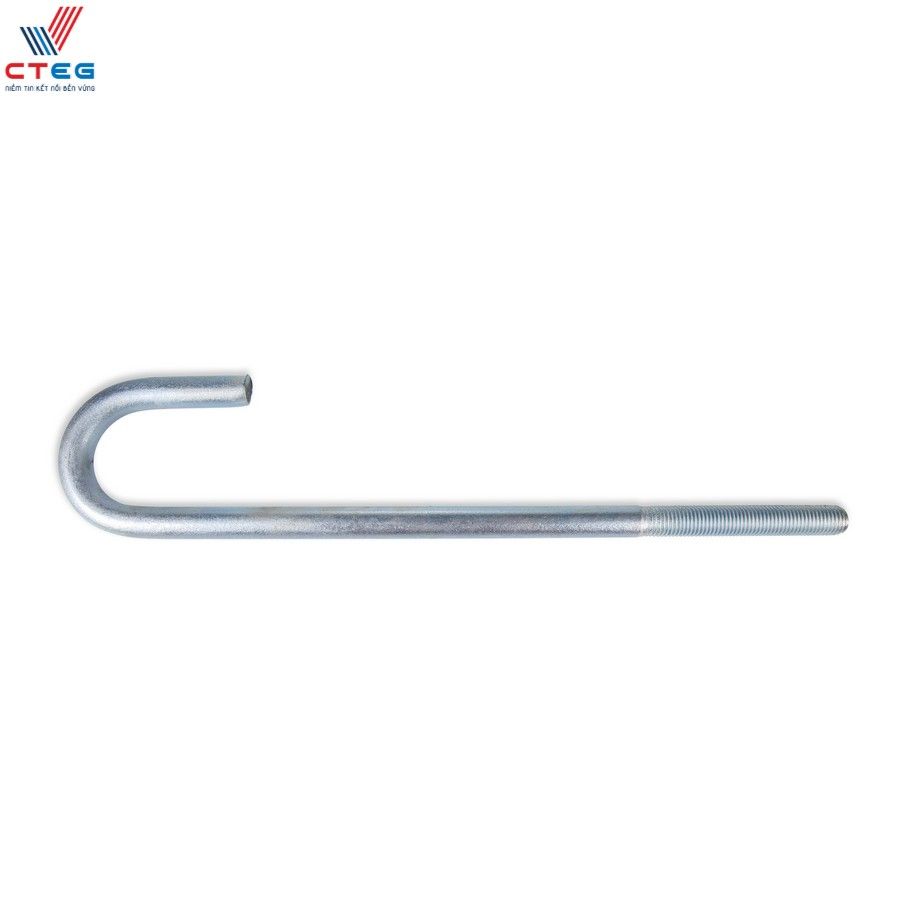
The industrial sector is the backbone of economic growth, and steel structures are its skeleton. From logistics warehouses to high-tech manufacturing plants, pre-engineered steel buildings rely heavily on J-type anchor bolts to connect steel columns to reinforced concrete plinths. In these environments, the bolts must withstand not only the static weight of the roof and walls but also the dynamic forces of overhead cranes, wind loads on vast surface areas, and thermal expansion.
At CTEG, we have witnessed a surge in demand for high-specification anchor bolts as Vietnam becomes a global manufacturing hub. Industrial giants require more than just standard fasteners; they need “Proved” reliability. A failure in an anchor bolt in a factory setting can lead to catastrophic structural misalignment, halting production and endangering lives. Therefore, we supply bolts that are rigorously tested for tensile strength and yield stress, ensuring they meet the specific grades required by industrial designers. Whether it is a Grade 5.6 bolt for a standard warehouse or a Grade 8.8 for a heavy industrial complex, the role of the J-bolt is to ensure that the industrial giant stands firm against all operational stresses.
Case Study: The LEGO Factory Project and Structural Precision
One of the most prominent examples of J-type anchor bolt application in recent years is the LEGO Factory project in Binh Duong. As a supplier for this massive, high-tech facility, CTEG had to meet stringent international standards for quality and precision. The LEGO Group’s commitment to sustainability and safety meant that every component, down to the anchor bolts, had to be certified and traceable.
For this project, the structural precision was paramount. The automated machinery and intricate assembly lines inside the factory require a perfectly level and stable floor. We supplied high-strength J-type anchor bolts capable of securing the massive steel frames that house the production lines. The bolts had to undergo rigorous quality checks, including tensile testing and dimensional verification, to ensure they fit the complex base plates designed by international engineers. This project serves as “Proof” of CTEG’s capability: by delivering thousands of precision-engineered bolts on schedule, we helped lay the foundation for one of Vietnam’s most advanced industrial facilities, demonstrating that our products meet the exacting standards of global corporations.
Anchoring Heavy Machinery and Vibrating Equipment in Industrial Plants
Beyond the building structure itself, J-type bolts play a crucial role in anchoring the machinery inside. Heavy equipment—such as stamping presses, turbines, and large conveyor motors—generates significant vibration and dynamic loads during operation. If not securely anchored, these machines can “walk” or shift, leading to misalignment, wear, and potential failure.
In these applications, J-type bolts are often used in conjunction with grouting to secure machine bases. The hook design is essential here to resist the cyclic uplift forces caused by vibration. CTEG often recommends and supplies high-grade bolts (8.8 or 10.9) for these applications to resist fatigue failure. By effectively coupling the machine to the massive concrete foundation, the J-bolts dampen vibrations and ensure smooth operation. This application highlights the versatility of the J-bolt: it is not just a structural connector, but a critical component in the operational efficiency of the plant floor.
Powering the Future: J-Type Anchor Bolts in Wind and Solar Energy
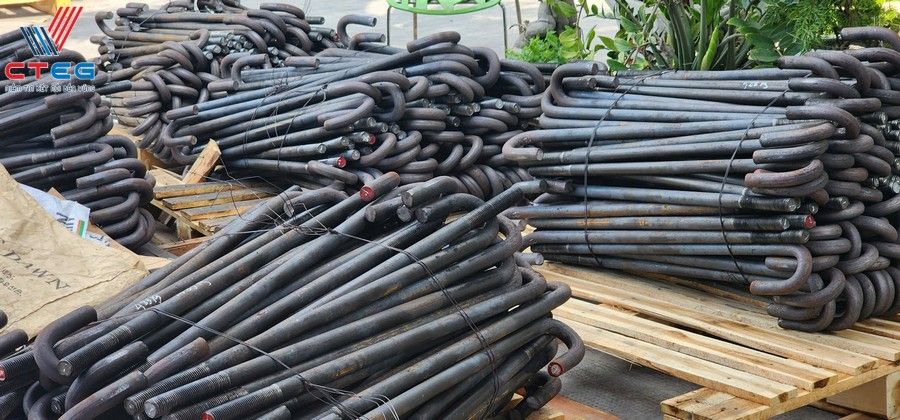
As the world shifts towards renewable energy, the infrastructure supporting it must evolve to handle new challenges. Wind and solar energy projects present some of the most demanding environments for anchor bolts. These structures are often located in open, harsh environments—coastal areas, highlands, or offshore—where they are exposed to relentless wind, moisture, and salt spray. Here, the “Promise” of the J-type bolt is one of endurance and extreme load capacity.
In the renewable sector, the cost of failure is astronomical. A loose bolt on a solar tracker or a compromised foundation on a wind turbine can lead to millions of dollars in damage and downtime. CTEG has been at the forefront of this transition, supplying specialized anchor bolts for wind and solar projects across Central Vietnam and the Central Highlands. We understand that these projects require more than just strength; they require resilience. Our solutions often involve high-strength steel combined with advanced corrosion protection, such as hot-dip galvanizing, to ensure that the green energy infrastructure remains secure for decades.
Foundation Stability for Wind Turbine Towers and Renewable Energy Hubs
Wind turbine towers are essentially giant levers acting on their foundations. The wind force at the hub height creates a massive overturning moment at the base. While the primary tower connection often uses specialized cage assemblies, J-type anchor bolts are frequently employed in the ancillary structures and the foundation reinforcement cages themselves. For smaller turbines or support structures, large-diameter J-bolts (M36 to M64) are critical.
These bolts must withstand high-cycle fatigue loads. The wind never stops blowing, meaning the bolts are under constant fluctuating stress. CTEG supplies Grade 8.8 and 10.9 anchor bolts for these demanding applications, ensuring high tensile strength and ductility. Our manufacturing process for these large-diameter bolts involves precise heat treatment to achieve the necessary mechanical properties without making the steel brittle. By providing these robust anchoring solutions, we help ensure that wind energy hubs can harvest power safely, regardless of how hard the wind blows.
Supporting Power Transmission Lines and Electrical Substations
The energy generated must be transported, and this is where the transmission grid comes into play. High-voltage transmission towers and electrical substations rely heavily on J-type anchor bolts. These lattice towers are subjected to wind loads on the cables, ice loading in some regions, and the tension of the lines themselves.
The foundations for these towers use J-bolts to anchor the tower legs to the concrete piers. Given the remote locations of many transmission lines, maintenance is difficult and costly. Therefore, the reliability of the initial installation is paramount. CTEG provides hot-dip galvanized J-bolts for these projects to resist environmental corrosion. Our bolts ensure that the transmission network remains stable, preventing blackouts and ensuring the reliable delivery of power from the source to the city. This application underscores the critical nature of our products in maintaining the lifeline of modern society.
Transportation Infrastructure: Bridges, Airports, and Highway Signage
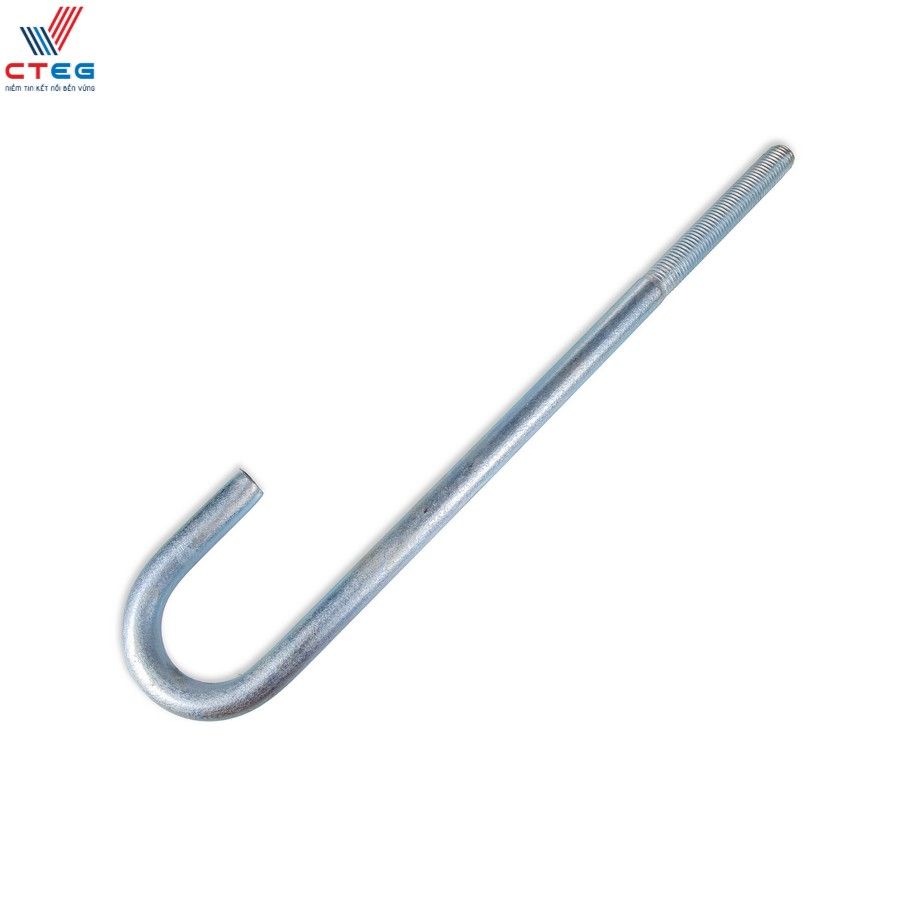
Transportation infrastructure is the circulatory system of the economy, and its safety is non-negotiable. Bridges, airports, and highways experience constant dynamic loading from vehicles, aircraft, and wind. J-type anchor bolts are ubiquitous in this sector, used for everything from securing massive bridge bearings to anchoring highway signage and lighting poles.
The “Picture” here is one of constant motion and safety. Every time a plane lands or a truck crosses a bridge, forces are transferred through the structure to the foundation. J-type bolts ensure that these connections remain rigid. At CTEG, we are proud to contribute to the safety of Vietnam’s transportation network. Our involvement in major projects proves that our manufacturing capabilities meet the rigorous standards required by the Ministry of Transport and international aviation authorities.
Long Thành International Airport: A Benchmark for Fastener Reliability
The Long Thành International Airport is one of the most significant infrastructure projects in Vietnam’s history. As a key supplier for this project, CTEG has demonstrated its capacity to deliver at a national scale. In an airport environment, Foreign Object Debris (FOD) is a major safety hazard, meaning that every fastener must be secure and durable.
We supplied a vast quantity of anchor bolts for the terminal structures, hangars, and auxiliary buildings. The specifications for an international airport are incredibly strict, requiring full traceability and adherence to ASTM and JIS standards. The J-type bolts used here secure the massive steel roof trusses that span the terminal, providing an open, column-free space for passengers. Our contribution to Long Thành is a testament to our “Quality – Prestige” motto. We provided not just bolts, but a guarantee of safety for millions of future passengers, proving that CTEG is a trusted partner for national-level infrastructure.
Securing Bridge Girders and Overpass Structural Supports
Bridges are dynamic structures that expand, contract, and vibrate. The bearings that support the bridge girders must be anchored securely to the piers, yet allow for controlled movement. J-type anchor bolts are often used to secure these bearing plates. They must handle high shear loads caused by braking vehicles and seismic forces.
For overpass structural supports and highway signage, the challenge is often wind load and vibration from passing traffic. A loose sign on a highway is a deadly hazard. CTEG manufactures J-bolts for these applications with strict attention to thread quality and material grade. We often supply these with double nuts or lock washers to prevent loosening due to vibration. By securing the vital components of our road network, our bolts help ensure that the journey is safe for everyone.
Technical Specifications and Material Selection for High-Load Projects
To truly “Push” for the best results, engineers must move beyond generic specifications and select the exact material properties required for their project. At CTEG, we don’t just sell bolts; we provide technical solutions. The performance of a J-type bolt is defined by its diameter, length, steel grade, and surface treatment.
We manufacture bolts ranging from M12 to M64, but the real differentiator is the steel grade. The choice between a Grade 4.6 and a Grade 10.9 bolt can mean the difference between a stable structure and a catastrophic failure. Furthermore, the environment dictates the finish. A bolt in a chemical plant needs different protection than one in a dry warehouse. Understanding these technical nuances is key to leveraging the full potential of our manufacturing capabilities.
Understanding Grade 4.6 to 10.9 Strength Requirements
The “Grade” of a bolt refers to its tensile strength and yield strength.
- Grade 4.6 & 5.6: These are mild steel bolts, commonly used for light to medium structures like small warehouses, light poles, and signage. They offer good ductility but lower load capacity.
- Grade 8.8: This is high-strength steel, the standard for major industrial projects, pre-engineered steel buildings, and heavy machinery anchoring. It offers a high yield strength, allowing for smaller diameters to carry larger loads.
- Grade 10.9: Ultra-high strength, used in critical applications like wind turbines and heavy bridges where extreme tensile loads are present.
CTEG supplies all these grades, ensuring that whether you are building a fence or a skyscraper, you have the exact strength required by your structural calculations.
Corrosion Protection: The Role of Hot-Dip Galvanizing (HDG) in Harsh Environments
Steel’s greatest enemy is corrosion. For infrastructure projects, especially those outdoors or in coastal areas, the longevity of the anchor bolt is determined by its coating. Hot-Dip Galvanizing (HDG) is the gold standard for corrosion protection. It involves dipping the steel bolt into molten zinc, creating a metallurgical bond that protects the steel from rust.
CTEG specializes in HDG anchor bolts. Unlike simple electro-galvanizing, HDG provides a thick, durable coating that can last for decades without maintenance. For the Long Thành Airport and wind power projects, HDG is often a non-negotiable requirement. We ensure that the threads are undercut or re-tapped after galvanizing to ensure a perfect fit with the nut, balancing protection with ease of installation.
Comparing J-Type vs. L-Type and Straight Anchor Bolts: Which to Choose?
Selecting the right anchor bolt shape is a common dilemma for engineers. While J-type bolts are versatile, understanding how they compare to L-type and straight bolts ensures the right choice for your specific application.
| Feature | J-Type Anchor Bolt | L-Type Anchor Bolt | Straight Anchor Bolt (with Plate) |
|---|---|---|---|
| Shape | Curved hook (J shape) | 90-degree bend (L shape) | Straight rod with nut/plate at bottom |
| Pull-Out Resistance | High (due to hook geometry) | Medium to High | Very High (relies on plate bearing) |
| Primary Use | Structural columns, heavy machinery, general infrastructure | Light poles, sign structures, lighter columns | Heavy industrial columns, high-tension loads |
| Installation | Cast-in-place | Cast-in-place | Cast-in-place or Post-installed (epoxy) |
| Cost | Economical | Economical | Higher (requires extra components) |
J-type bolts are often preferred over L-type for heavier loads because the hook geometry can provide slightly better engagement with the concrete in certain configurations. However, for extreme tension loads where concrete breakout is a concern, a straight bolt with a heavy washer plate might be engineered. CTEG advises consulting with your structural engineer, but for the vast majority of standard infrastructure needs, the J-type bolt offers the perfect balance of performance and cost-efficiency.
Best Practices for Installation and Long-Term Maintenance
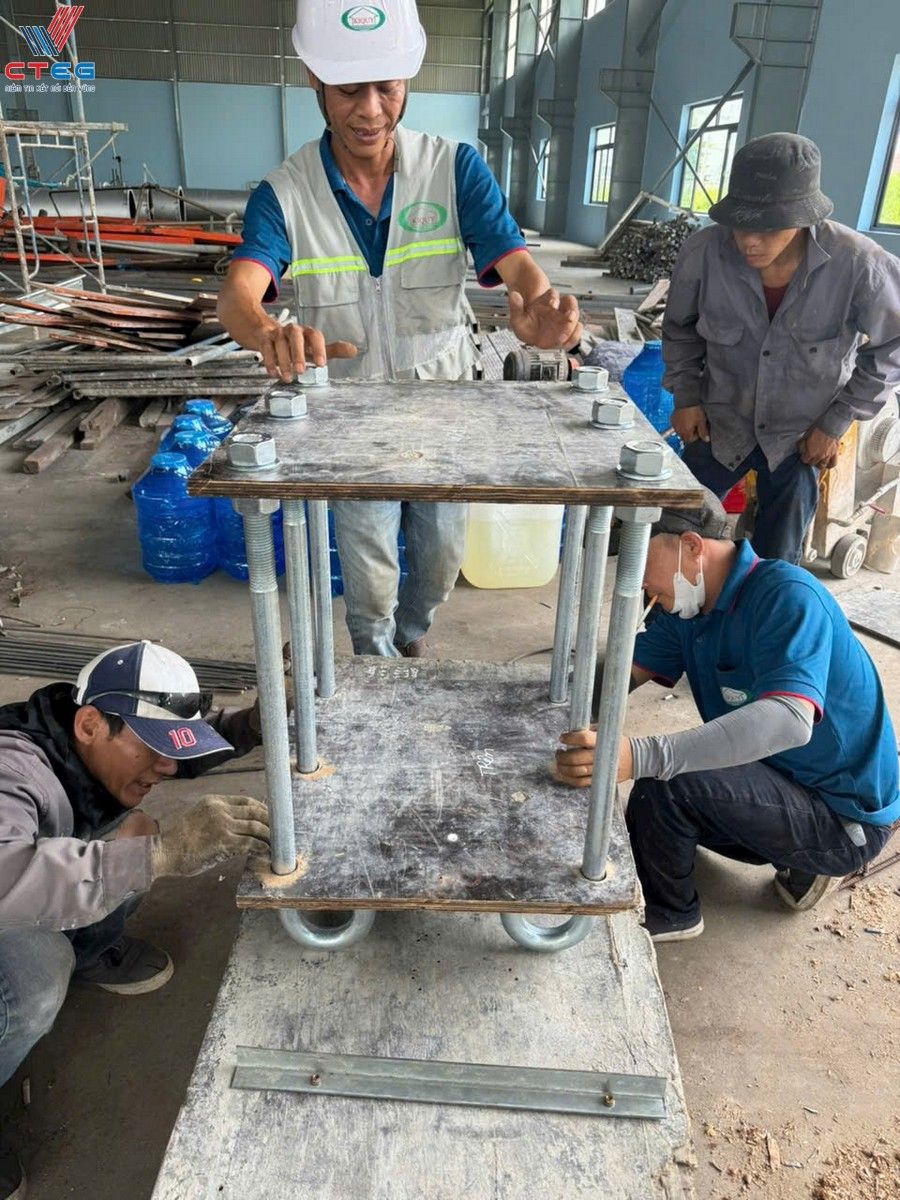
Even the highest quality Grade 8.8 J-bolt from CTEG can fail if installed incorrectly. The “Promise” of stability relies on execution. The most critical phase is the pre-pour installation. The bolts must be held rigidly in place using a template (often made of wood or steel) to ensure they match the hole pattern of the steel column base plate exactly. A deviation of even a few millimeters can cause massive headaches during steel erection.
Key Installation Tips:
- Template Usage: Always use a rigid template to secure the bolt group.
- Thread Protection: Wrap the exposed threads with tape or a plastic sleeve to prevent concrete splatter from fouling the threads during the pour.
- Vibration: Ensure the concrete is properly vibrated around the hook to eliminate air pockets, which would weaken the pull-out strength.
- Projection Height: Double-check the projection height (the amount of bolt sticking out) to ensure there is enough thread for the grout, base plate, washer, and nut.
Long-term maintenance involves periodic visual inspections for corrosion and checking nut tightness, especially for machinery subjected to vibration. With CTEG’s high-quality galvanized coatings, maintenance needs are significantly reduced.
Frequently Asked Questions (FAQ) about J-Type Anchor Bolts
What is the difference between J-type and L-type anchor bolts?
The main difference is the shape of the embedded end. J-bolts have a curved hook, while L-bolts have a sharp 90-degree bend. J-bolts are often preferred for applications requiring slightly higher pull-out resistance or specific geometric fits within the rebar cage, though both are widely used for structural anchoring.
Can CTEG manufacture J-bolts to custom sizes?
Yes. CTEG specializes in custom manufacturing. We can produce J-type anchor bolts in diameters from M12 to M64 and in any length required by your design. We fabricate strictly according to your technical drawings and specifications.
What steel grades are available for J-type bolts?
We supply a full range of grades including 4.6, 5.6, 6.6, and high-strength 8.8 and 10.9. We also offer stainless steel options (SUS 201, 304, 316) for specialized environments.
Do your anchor bolts come with certification?
Absolutely. All CTEG products are accompanied by CO/CQ (Certificate of Origin/Quality) and factory test reports verifying tensile strength and material composition. We adhere to standards like DIN, ASTM, JIS, and TCVN.
How do I prevent my anchor bolts from rusting?
For outdoor or harsh environments, we recommend Hot-Dip Galvanizing (HDG). This provides a thick, durable zinc coating that offers superior corrosion resistance compared to standard electro-galvanizing.
Conclusion: The Future of Anchoring in Large-Scale Infrastructure
From the precision of the LEGO factory to the vast expanse of Long Thành Airport, J-type anchor bolts are the silent guardians of our infrastructure. They translate the static strength of concrete into the dynamic stability of steel. As projects become larger and more complex, the need for high-quality, certified, and precisely manufactured fasteners has never been greater.
At Cường Thịnh (CTEG), we are committed to “Pushing” the industry forward with products that meet the highest international standards. Do not compromise on the foundation of your project. Contact CTEG today for a consultation and let us provide the anchoring solutions that will keep your structures standing tall for generations to come.

Có thể bạn quan tâm
Những lưu ý quan trọng khi lựa chọn bu lông neo chữ L cho dự án
Real-World Applications of J-Type Anchor Bolts in Major Infrastructure: A Comprehensive Guide
The Engineering Backbone: How Anchor Bolts Secure Mega-Structures Like Long Thanh International Airport
Tại sao bu lông neo chữ L là lựa chọn hàng đầu cho móng công trình?